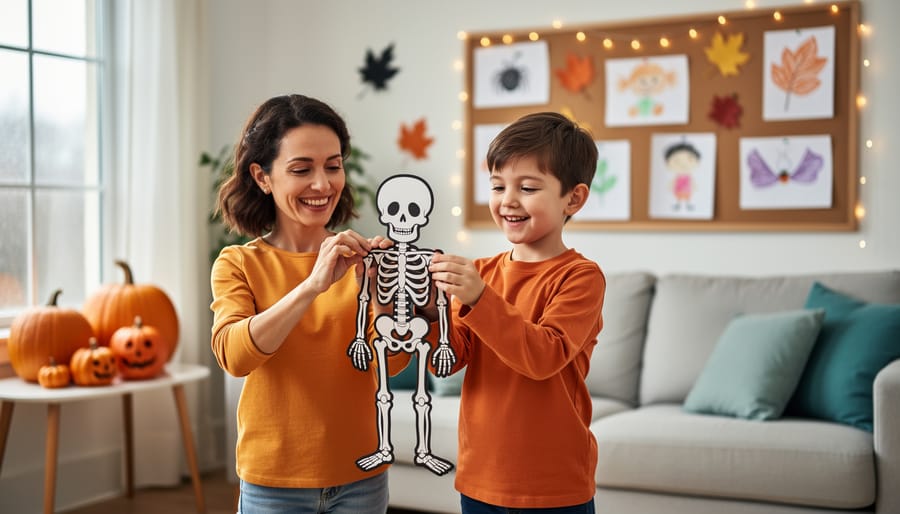
Last week, my six-year-old announced at dinner that skeletons are “the coolest thing ever,” and suddenly our October became a full-blown anatomy lesson disguised as Halloween prep. If your child has caught skeleton fever this season, you’re in good company. That fascination offers a rare sweet spot where spooky fun meets genuine learning, and smart parents can ride that wave straight through Halloween and beyond.
Skeletons captivate kids because they’re simultaneously thrilling and safe. They represent something mysterious (what’s inside our bodies?) without being truly frightening, especially when presented in the playful, cartoonish way most Halloween decorations show them. This natural curiosity creates an opening for some of the best educational moments you’ll have all year, whether you’re explaining how bones protect our organs or simply counting ribs on a plastic decoration together.
The timing couldn’t be better. October hands you built-in enthusiasm, with skeleton imagery everywhere from store displays to classroom bulletin boards. But the real magic happens when you channel that seasonal excitement into activities that stick. Think skeleton scavenger hunts that teach bone names, glow-in-the-dark crafts that sneak in anatomy lessons, or bedtime stories that turn skeletons from scary to silly.
This guide walks you through understanding why your child loves skeletons, practical ways to celebrate that interest this Halloween season, age-appropriate educational activities that actually hold their attention, and gentle strategies for the rare kid who finds bones more frightening than fun. You’ve got questions, and we’ve got answers that work in real family life.
What Makes Skeletons So Magnetic to Children
There’s something about skeletons that flips a switch in kids’ brains, part fascination, part thrill, and entirely irresistible. Unlike truly frightening things, skeletons occupy this perfect sweet spot of being spooky without being dangerous. They’re inside all of us, which makes them familiar in a way that ghosts or monsters aren’t. Kids can poke at the idea of something scary while knowing it can’t actually hurt them. It’s like a practice run for managing bigger fears, all wrapped up in rattling bones and goofy grins.
The appeal shifts as children grow. Toddlers often love skeletons for their simple, graphic appearance. Those clean white bones against black backgrounds make for high-contrast visuals that grab young eyes. They also move in funny, exaggerated ways, all that rattling and dancing feels silly rather than sinister. Preschoolers start to connect the dots between skeletons and their own bodies, leading to endless questions about what’s inside them. They’ll proudly tell you they have bones too, and suddenly every bump and bruise becomes an anatomy lesson.
By early elementary years, the fascination deepens into genuine curiosity. Six-to-ten-year-olds want to know how many bones they have, why bones are hard, and what happens if one breaks. They’re old enough to appreciate the science without being overwhelmed by mortality concepts. Skeletons become a gateway to understanding their own bodies, mixed with the cultural excitement of Halloween. The spooky factor adds just enough edge to make learning feel like an adventure rather than a lesson.
Turning Skeleton Fever into Learning Moments
For the Littlest Learners (Ages 2-5)
At this age, skeleton exploration should feel like pure play, not a lesson. Start with board books that show friendly, cartoon-style skeletons doing everyday activities, brushing teeth, jumping, waving. These normalize the concept without any spooky context. “Funnybones” by Janet and Allan Ahlberg remains a perennial favorite because the skeletons are silly and relatable.
Tactile toys work beautifully for this age group. Chunky wooden skeleton puzzles with just a few pieces help toddlers understand that bodies have parts that fit together. Some kids love soft, huggable skeleton dolls they can use during pretend play. Point to the toy’s arm, then their own arm, making the connection concrete and immediate.
Songs with body movements transform abstract concepts into active learning. “Dem Bones” (the knee bone’s connected to the leg bone) becomes a wiggle session where everyone touches their knees, legs, and toes. Make it interactive: “Can you find your ribs? Let’s tap them like a drum!”
The goal isn’t anatomical accuracy, it’s comfortable familiarity. When your toddler sees a skeleton decoration at the store, you want recognition and curiosity, not fear. Keep everything light, playful, and focused on celebrating how amazing their own bodies are.
For Curious Kids (Ages 6-10)
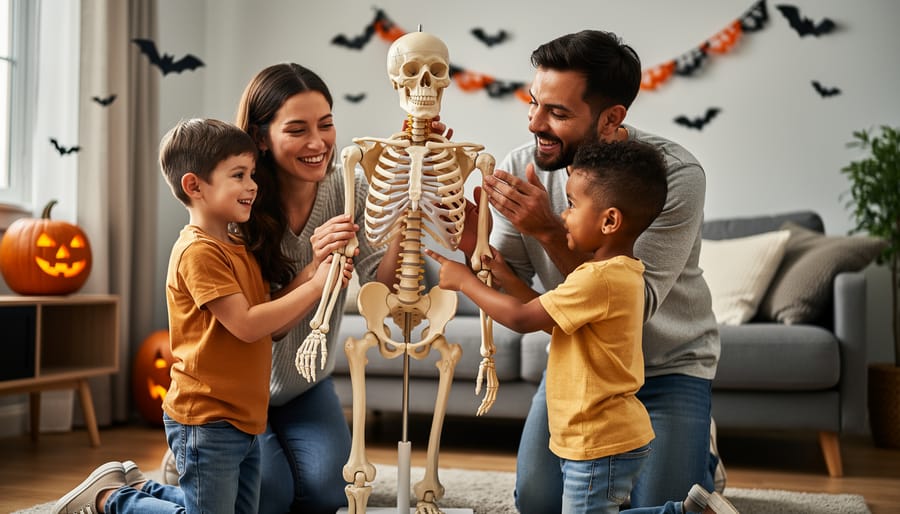
Six-to-ten-year-olds want to know how things work. Skip the sing-song skeleton songs and bring out the real stuff. A plastic skeleton model from the science aisle becomes an obsession when kids can take it apart and reassemble the pieces themselves, suddenly they’re asking which bone connects where and why ribs curve the way they do.
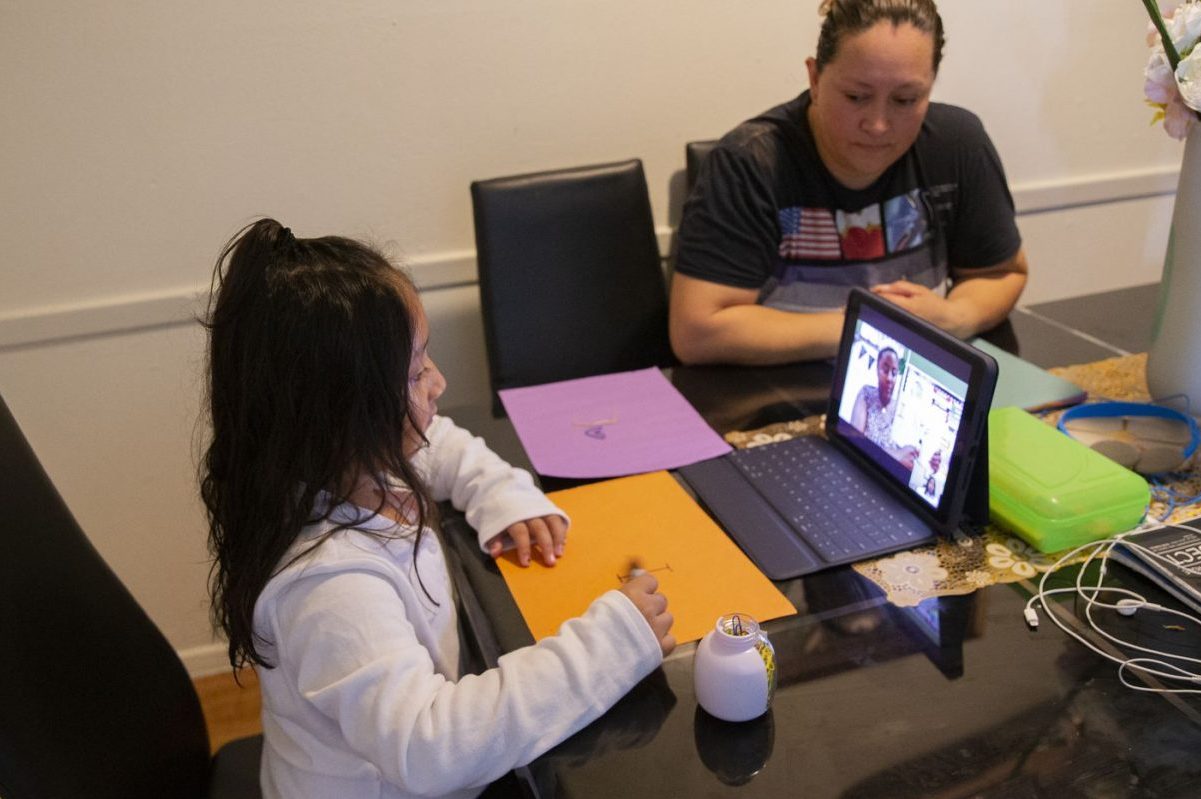
Download an anatomy app that lets them build a skeleton layer by layer, adding organs and muscles as they go. My son spent three weeks convinced he was going to be a doctor after using one. These same learning strategies that worked during remote school translate perfectly to skeleton exploration, short, focused sessions beat hour-long lectures.
For hands-on projects, try the classic vinegar-and-chicken-bone experiment. Soak a clean chicken bone in vinegar for three days and watch it turn rubbery as the calcium dissolves. Kids grasp bone composition instantly when they can bend what was rigid. Or sketch life-sized skeleton outlines on butcher paper, labeling major bones together. They’ll correct you if you put the femur in the wrong spot, trust me.
Skeleton-Themed Halloween Fun That Actually Works
DIY Skeleton Crafts Kids Can Actually Make
Last weekend, I watched my six-year-old lose his mind with excitement when he discovered we could make skeletons from things already in our craft drawer. No special trip to the store, no Pinterest-perfect setup, just simple supplies and big fun.
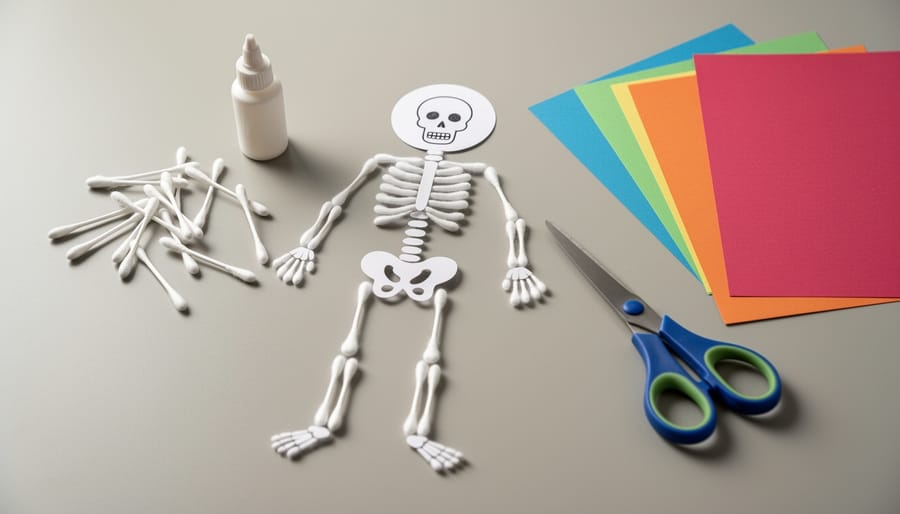
Cotton Swab Skeletons
These are ridiculously easy and surprisingly educational. You’ll need black construction paper, white cotton swabs, and glue. Kids arrange the swabs to form a skeleton’s basic structure, one for the spine, a few broken in half for ribs, and smaller pieces for arms and legs. My daughter’s looked more like a stick figure having a panic attack, but she was so proud. The tactile nature helps younger kids understand how bones connect, and older ones can get pretty anatomically accurate if they’re feeling it.
Paper Plate Skeletons
Cut a paper plate in half for the ribcage, use the other half for the skull. Add paper strips for arms and legs. Kids can paint them, leave them white, or cover them in glow-in-the-dark stickers for fun Halloween decorations. This project works beautifully for mixed-age groups because toddlers can glue pre-cut pieces while bigger kids design their own.
Printable Templates
Free printable skeleton templates are everywhere online. Print, color, cut, assemble. Keep a stack ready for rainy afternoons or unexpected playdates. Some kids want to follow instructions precisely; others will Frankenstein three templates together into some wild creation. Both approaches are perfect.
Skeleton Party Games That Keep Everyone Happy
When you’re hosting a Halloween party, skeleton-themed games rescue you from the inevitable sugar-fueled chaos. Start with Pin the Bone on the Skeleton, tape a large poster-board skeleton to the wall and cut out individual “bones” from white cardstock. Kids take turns blindfolded, trying to place the bones correctly while everyone giggles at the wonky results.
For high-energy groups, try Skeleton Says (like Simon Says, but the leader is “Mr. Bones”). Call out movements: “Mr. Bones says touch your skull,” “Mr. Bones says wiggle your ribs.” Kids who move without hearing “Mr. Bones says” sit out. You can incorporate kid yoga poses like skeleton stretch or bone warrior for calmer moments between rounds.
A skeleton scavenger hunt works brilliantly, hide plastic bones around your yard or house with clues leading to the next bone. The final bone reveals a treasure (small toys or Halloween costume ideas work great). For musical bones, scatter paper skeleton cutouts on the floor, when the music stops, kids jump to stand on one. Remove a skeleton each round until you have a winner.
When Skeleton Love Crosses into Fear Territory
Last week, my friend’s daughter went from proudly wearing her skeleton costume to bursting into tears at the sight of Halloween decorations in the grocery store. That shift from fascination to fear can happen surprisingly fast, and it catches many of us off guard.
The line between thrilling and threatening is remarkably thin for young children. What seemed exciting yesterday might suddenly register as genuinely scary, especially as Halloween gets closer and decorations become more elaborate and intense. You’ll know your child has crossed that line when they avoid rooms with skeleton decorations, have trouble sleeping, or start asking anxious questions about bones and death. Some kids might regress into clingy behavior or become unusually quiet around skeleton imagery.
When fear takes hold, resist the urge to push through it or convince them there’s nothing to worry about. Instead, give them control over their environment. Pack away the skeleton decorations temporarily, skip the Halloween store trip, or choose a different costume. You’re not overreacting; you’re respecting their developmental stage and emotional capacity.
For kids who want to overcome the fear but need help, start small. Read gentle skeleton books together during daylight hours, or watch age-appropriate videos that show skeletons in funny, non-threatening ways. Let them touch a plastic skeleton bone while you explain what it is in simple terms. Some children respond well to drawing skeletons silly faces or dressing them in goofy hats, which shifts the power dynamic and makes the imagery less menacing.
Remember that developmental fears are completely normal and usually temporary. Your child isn’t broken or overly sensitive, they’re processing the world in their own way and timeline.
Beyond October: Keeping the Skeleton Magic Alive
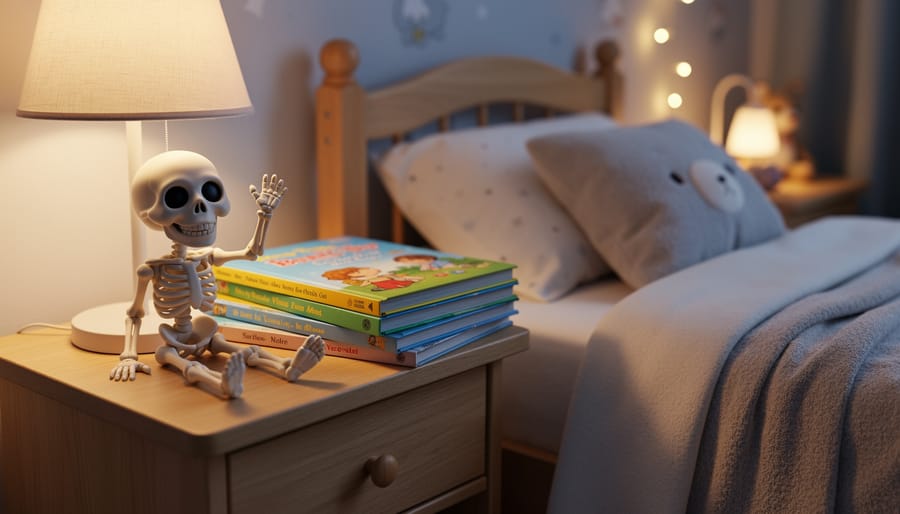
Just because the jack-o’-lanterns get packed away doesn’t mean your child’s skeleton fascination has to disappear too. If your kid is still pointing at X-rays in the doctor’s office or building bone structures with their blocks in January, lean into it.
Natural history museums become year-round gold mines. Most have permanent skeleton exhibits, dinosaur bones, whale skeletons suspended from ceilings, comparative anatomy displays. Let your child lead the pace. Mine once spent forty minutes examining a single bear skeleton, asking why the claws were so curved. That kind of sustained focus tells you the interest is real.
Keep anatomy books on the coffee table where they’re accessible, not shelved away as “educational resources.” My daughter treats our glow-in-the-dark skeleton poster like artwork, and honestly, it sparks more dinner table conversations than any decor I’ve carefully chosen.
Fold body talk into everyday moments. “Your funny bone isn’t actually a bone, it’s a nerve running along your elbow.” “Feel your ribs expand when you breathe deeply.” These micro-conversations build scientific literacy without feeling like lessons.
If the passion deepens, consider age-appropriate anatomy models or subscription boxes focused on human biology. Some kids move on to other obsessions, but others find a genuine path toward medicine, biology, or just understanding how bodies work.
The point isn’t forcing sustained interest. It’s staying curious alongside them, making space for their questions, and showing that learning doesn’t need a holiday theme to matter.
Your child’s skeleton obsession might have started with Halloween, but what you’re really witnessing is their natural curiosity lighting up. These quirky fixations, whether they last a week or a year, are precious windows into how your kid learns and connects with the world around them.
When you lean into these interests rather than dismiss them as phases, you’re doing something powerful. You’re showing your child that their enthusiasm matters, that learning can be joyful, and that you’re genuinely interested in what excites them. That skeleton model on the shelf becomes more than a toy. It’s a tangible reminder that you see them, you get them, and you’re willing to explore alongside them.
The beautiful thing? This approach works for whatever captures their attention next, whether it’s dinosaurs, space, bugs, or something completely unexpected. The skeleton fascination might fade, but the message you send by embracing it sticks with them.
I’d love to hear how skeleton fever has played out in your house. What creative activities worked? Did your kid ask any hilarious anatomy questions? Drop a comment below and let’s swap stories. Sometimes the best parenting ideas come from other parents who’ve been there, done that, and lived to laugh about it.