Six simple poses cover almost everything a kid’s body needs at home: Cat-Cow, Downward-Facing Dog, Tree Pose, Child’s Pose, Butterfly Pose, and Cobra Pose. Each takes under a minute, needs no gear beyond a bit of floor space, and works for ages 3 and up. Kids can usually get the basic shape after one quick demo from you.
I chose these six because they’re safe, easy to explain, and fun enough that kids don’t realize they’re stretching. They also cover the bases: gentle spine movement, balance, hips, strength, and a calm-down moment for the days when feelings get big. None of them ask for perfect form. Wobbling, giggling, and falling out of Tree Pose are all part of it.
Think of this as a pick-and-play list. Try one pose while dinner simmers, or string a few together before bedtime. A little hiss in Cobra goes a long way with a sleepy toddler.
Below, you’ll find each pose with simple cues, what it’s good for, and an easy way to make it feel like a game. Then a few quick answers to the questions parents ask most.
Which pose gets the biggest laugh at your house? Tell us in the comments, because I’m always collecting new silly sound effects.
How We Chose These Poses (and Why They Work for Little Bodies)
Picking just six poses out of the dozens out there wasn’t easy, so I leaned on a few simple filters. Think of this as curation, not a lab test. I looked for poses that felt friendly to families who have never rolled out a mat in their lives:
- Beginner-friendly, so nobody needs yoga experience to get started.
- No equipment required, just a bit of floor.
- Playful names kids connect with, like cat, dog, and butterfly.
- Small-space friendly, because most of us are practicing between the couch and the toy bin.
- Easy to adapt by age, from wiggly toddlers to big kids.
I’ll never forget my first try at yoga with my own wiggly kiddo. We lasted about ninety seconds before the giggles took over. What made it click was letting go of “doing it right” and just letting my little one be a cat, a tree, a snake. Suddenly they were asking for more.
So here’s the gentle reminder I wish I’d heard earlier: there’s no single right way to do any of these. If your child wobbles, flops over, or invents a brand-new pose, that still counts. The goal is moving, breathing, and having fun together.
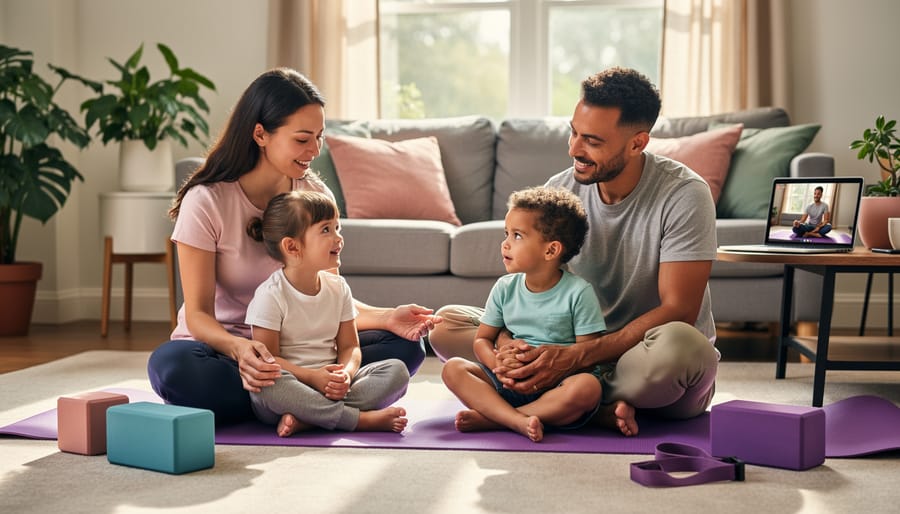
Before You Start: Setting the Mood for Kid-Friendly Yoga
Before you roll anything out, set the scene. Pick a cozy corner with a soft rug or a blanket, and keep the space clear of toys you might trip over. Aim for just 10 to 15 minutes, which is plenty for little attention spans, especially after a day of school stress.
Join in yourself, even if you feel a bit silly. Kids copy what they see, and your wobbles make theirs feel okay.
Let your kids lead with their imaginations too. If they want to be a grumpy lion instead of a calm cat, go with it. Perfection isn’t the goal, and busy kids do best when it feels like playtime. Tell us about your family’s yoga moments in the Snuggle Mama community. We’d love to hear them!
1. Cat-Cow: A Gentle Wake-Up for Sleepy Spines
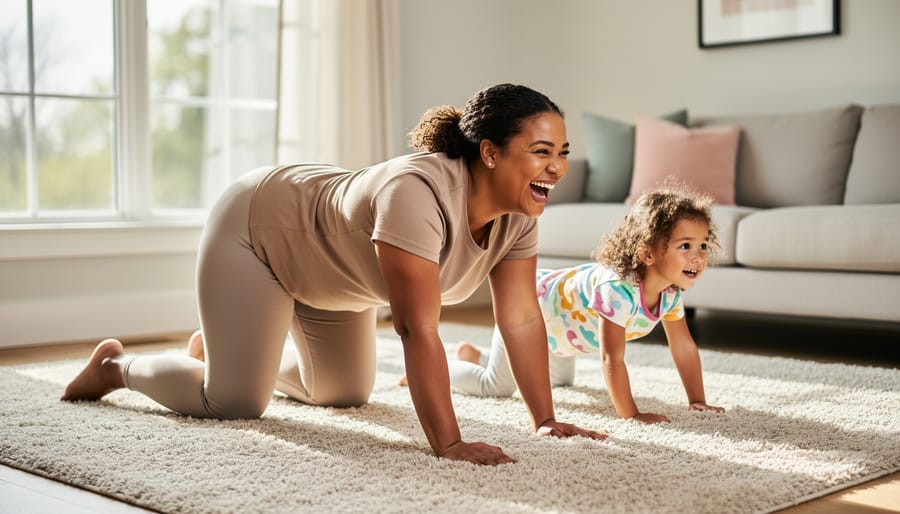
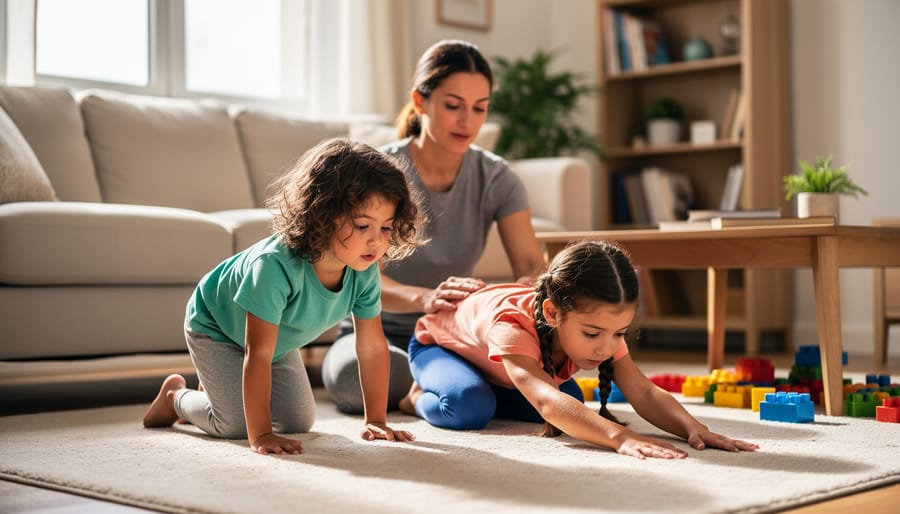
Cat-Cow is usually the pose that wins over the skeptics. Kids get down on their hands and knees, then take turns arching their backs like a grumpy cat and dipping them low like a cow, with a “meow” and a “moo” to match. It’s hard to stay stiff when everyone is mooing at the living room rug.
Beyond the giggles, this gentle movement stretches the spine and wakes up stiff backs after a long day of sitting. It also gives kids a first taste of breath awareness, since the movement naturally follows their inhale and exhale.
Here’s how to try it:
1. Start on hands and knees, with hands under shoulders and knees under hips.
2. Breathe in, drop the belly, lift the chin, and say “moo” like a happy cow.
3. Breathe out, round the back toward the ceiling, tuck the chin, and say “meow” like a scared cat.
Go back and forth five or six times, slow and silly.
For little ones, skip the breathing instructions and just focus on the animal sounds. Older kids can match each movement to a slow breath, or try it with their eyes closed to notice how their spine feels.
2. Downward-Facing Dog: The Playful Stretch Kids Already Love
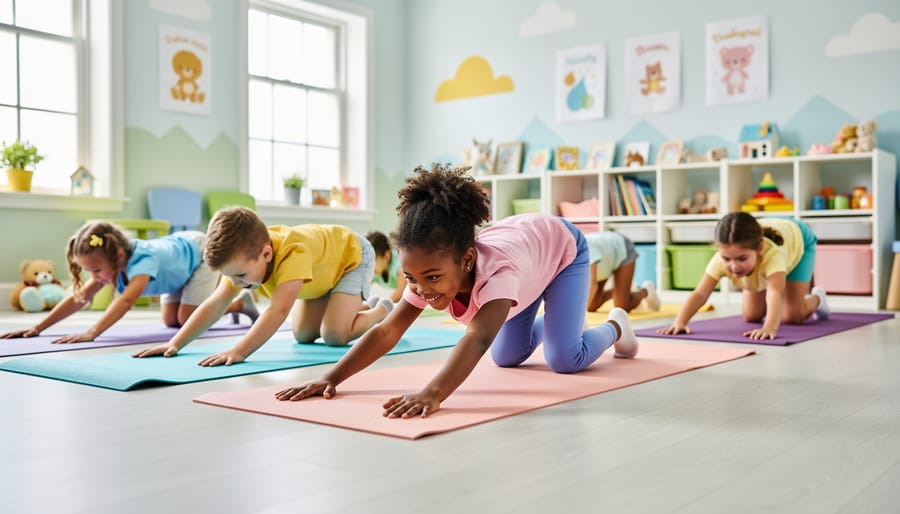
Chances are your kids already do this pose without being asked. Watch a toddler bend over to peek through their legs, or a puppy stretch after a nap, and you’ve seen downward-facing dog in the wild. Calling it the “puppy stretch” gets even reluctant kids on board.
Have your child start on hands and knees, then tuck their toes and lift their hips up toward the ceiling, making an upside-down V. This one stretches the backs of the legs and the spine while building real arm and shoulder strength, which little ones don’t always get from everyday play.
Here are two cues that work like magic. First, “bend those knees.” Tight hamstrings are normal, and soft knees let kids lengthen their back instead of rounding it. Second, “push the floor away,” which helps them press through their hands and use their arms.
Now add the fun. Let them wag their tail by swaying their hips side to side, or give a big “woof!” Lift one “paw” off the floor for a bonus balance challenge. When we do it at home, the barking usually turns into giggles within seconds, and honestly, that’s the point.
3. Tree Pose: Balance and Focus in a Wobbly Package
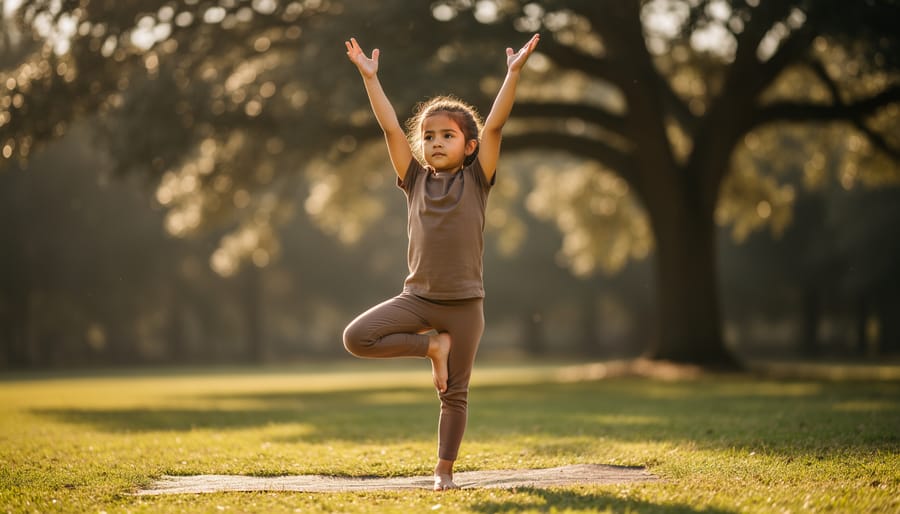
Tree Pose is the one where your kiddo stands tall on one foot, like a tree with roots growing right through the floor. Have them shift their weight onto one leg, then rest the other foot against the calf or ankle. Never the knee, since that can strain a growing joint. Hands can reach up high like branches or press together at the chest, whichever feels steadier.
Here’s the honest truth: there will be wobbling. Lots of it. The first time my daughter tried this, she lasted about three seconds before toppling onto the couch cushions, laughing so hard she couldn’t try again for a full minute. That’s totally fine. Falling over is part of how little bodies learn balance.
Tell your child to pick one spot to stare at, like a stuffed animal across the room. That tiny trick builds focus and keeps them steadier.
Once they’ve got the hang of it, try a windy day game. You become the breeze, gently blowing on your little tree so its branches sway. See if they can stay rooted. Then switch, and let them blow on you!
4. Child’s Pose: A Cozy Reset for Big Feelings
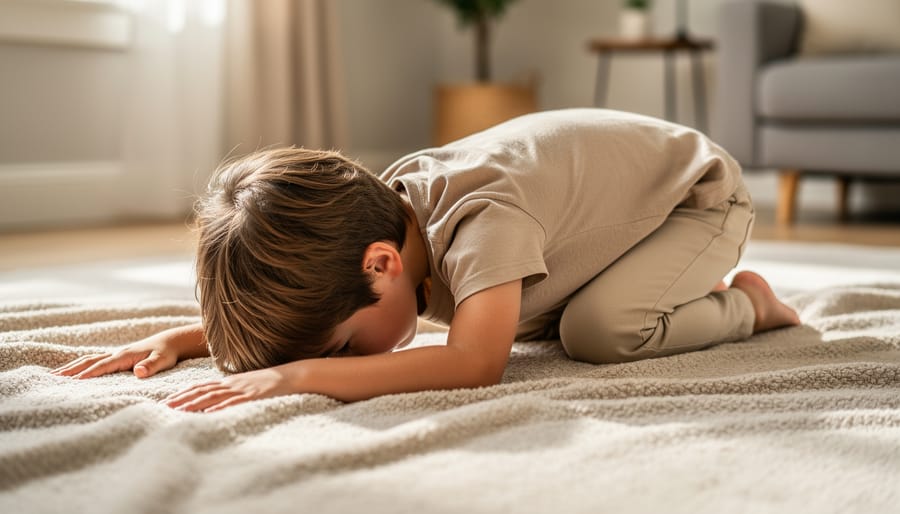
Child’s Pose is the one I reach for when everything feels like too much. Have your child kneel, sit back on their heels, then fold forward until their forehead rests on the floor. Arms can stretch out in front like a sleepy cat, or rest alongside the legs with palms up. A small pillow under the forehead works wonders if they need extra comfort.
Once they’re curled up, add slow belly breaths. Ask them to smell the flower, then blow out the birthday candle. Three or four rounds is plenty. You can rest a hand on their back so they feel your steady calm.
I learned how well this works on one rough afternoon, when my little one melted down over a broken cracker. Nothing I said helped. So I curled up next to her in Child’s Pose and started breathing loudly and dramatically. Within a minute, she had joined me, and the storm softened.
It’s great after school, during overstimulating moments, or as part of a bedtime wind-down. Follow the same basic safety tips as always: keep the space clear and never force a position.
5. Butterfly Pose: Flapping Wings for Happy Hips
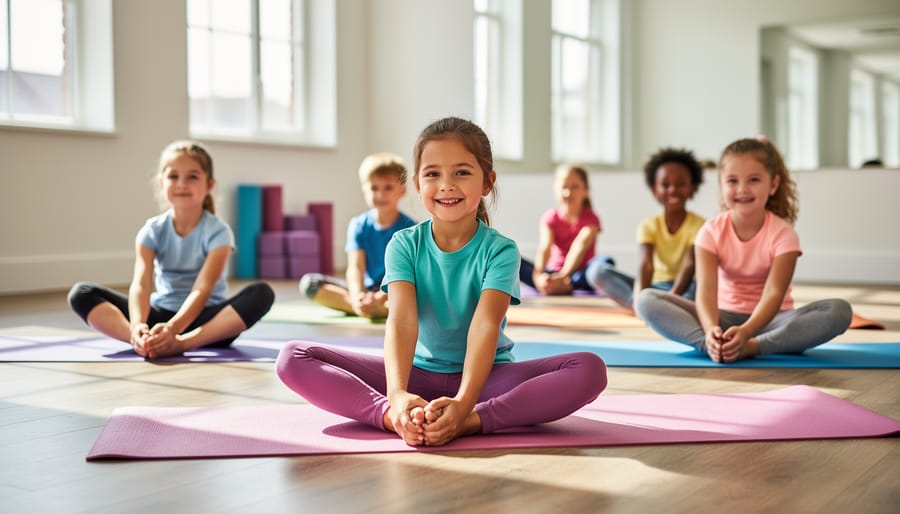
Kids spend a lot of their day sitting, whether it’s at a school desk, on the bus, or cross-legged on the carpet during circle time. Butterfly Pose is a gentle way to give those hips a little love.
Have your child sit tall with the soles of their feet pressed together and their heels tucked comfortably in front of them. Then let those knees flap up and down like butterfly wings, slow and soft or fast and silly. They’ll feel a mild stretch through the hips and inner thighs, with no pushing needed. If their knees hover high, that’s perfectly fine. Every little body opens at its own pace.
For a story-time twist, narrate a butterfly’s adventure as the wings flutter from flower to flower. When the story ends, the butterfly “lands” on a petal. Knees settle, hands rest in the lap, and everyone takes a quiet breath together.
It’s a sweet little pause you can slip into your regular family routines perhaps right after homework or just before bath time.
6. Cobra Pose: A Little Hiss to Build Back Strength
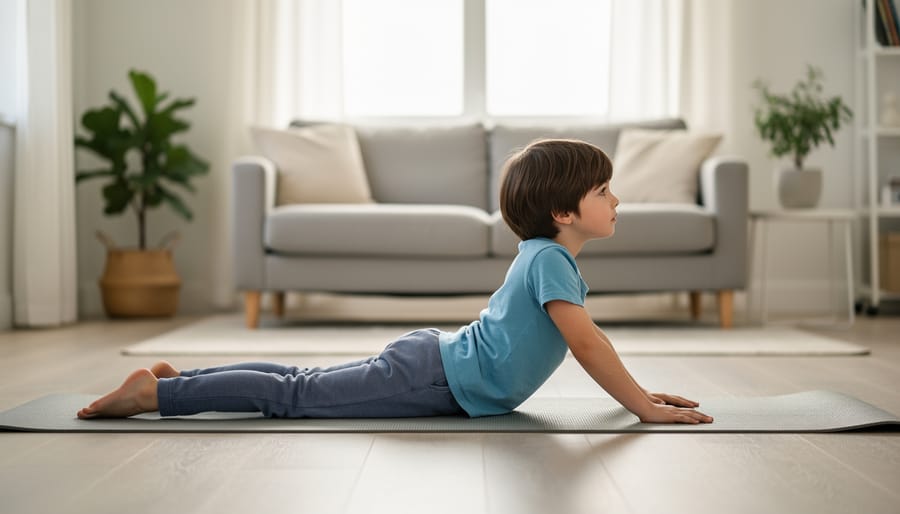
Cobra is the pose that turns your living room floor into a snake den. Have your child lie on their tummy with their legs stretched out behind them and their hands flat on the floor, right under their shoulders. Then they press gently into their hands and lift their chest, like a snake rising up to look around. And yes, hissing is strongly encouraged. A long “sssss” on the way up is actually a great built-in breathing exercise.
This one builds strength in the back and shoulders, opens up the chest, and helps with posture. That’s a real bonus for kids who spend their days hunched over desks, tablets, and backpacks.
A few safety cues keep it comfy:
– Keep elbows tucked in close to the body.
– Lift only as high as feels good. Low and gentle is plenty.
– Keep the tops of the feet resting on the floor.
– Never push or pull them higher. If they feel any pinch in the lower back, they should lower down and rest.
To make it a game, try “slither and freeze.” Your little snake slithers across the floor on their belly, then freezes in a cobra whenever you call out “Sssstop!”
Quick Answers to Common Questions About Kids’ Yoga
What age can kids start yoga?
Pretty much any age! Toddlers can copy simple poses like Cat-Cow, and school-age kids can handle the whole list. Follow your child’s lead and keep it playful.
How long should a session last?
Ten to fifteen minutes is plenty for most kids, and even five counts. Stop while they’re still having fun.
What if my child won’t sit still?
Wiggles are totally normal, and honestly part of the fun. Try the animal sounds in Cat-Cow or Cobra, or let them lead a pose of their own.
Do we need a yoga mat?
Nope. A carpet, a folded blanket, or a soft spot on the living room floor works fine. Just make sure there’s enough room to stretch without bumping the coffee table.
Can yoga help with bedtime?
It can! Slower poses like Child’s Pose and Butterfly, paired with a few deep belly breaths, make a cozy wind-down routine before pajamas and stories.
Whatever questions are floating around your house, remember there’s no test and no wrong way to do this. If a pose flops one day, shrug it off and try again tomorrow.
Make Yoga a Happy Family Habit: Your Takeaway
These six poses, from the sleepy-spine stretch of Cat-Cow to the cozy curl of Child’s Pose, are simple, playful ways to help your kids move, focus, and calm down. Nobody needs perfect form here. Showing up and having a little fun matters far more than getting every angle right.
So which one will you start with? Tree Pose wobbles are always good for a laugh. Then come tell us how it went! Share your family’s yoga stories with the Snuggle Mama community, or sign up for our newsletter for more parenting tips delivered to your inbox.