Keeping hemp-derived cannabis products away from children requires three essentials: secure, locked storage, clear household rules, and an age-appropriate conversation about what these products are and why they’re off-limits. If you use Exhale Wellness Delta 9 products or similar items at home, treating them with the same caution you’d give prescription medication protects your kids from accidental ingestion while letting you maintain the wellness routine that works for you.
Here’s the reality no one talks about enough: pediatric exposures to hemp-derived THC products have climbed steadily since these items became widely available, and most incidents happen because gummies or chocolates look exactly like regular treats. Your five-year-old can’t tell the difference between a regular gummy bear and one infused with Delta-9 THC, and frankly, neither can most adults at a glance.
I learned this the hard way when my son asked if he could try “the special candy” he spotted in my purse. My heart stopped. That moment taught me that good intentions aren’t enough when curious hands and eyes are involved.
This isn’t about judgment. Many parents rely on hemp-derived products for sleep, anxiety, or chronic pain, and there’s nothing wrong with that. What matters is creating a safety plan that fits your real life, not some impossible standard. You need practical strategies for storage, scripts for talking to kids at different ages, and a clear action plan if accidental ingestion happens.
Because here’s what parents need to understand: you can use these products responsibly and keep your children safe. It just takes the right approach.
Understanding What Hemp-Derived Cannabis Actually Means
Let me be honest with you: if you’ve walked through a grocery store, gas station, or wellness shop lately, you’ve probably seen shelves packed with gummies, oils, and drinks labeled “hemp-derived.” Maybe you’ve even bought some for sleep or stress. But if you’re like most parents, you’ve also wondered what exactly you’re bringing into a home with kids.
Hemp-derived cannabis products come from the hemp plant, which is simply a variety of Cannabis sativa containing very low levels of delta-9 THC (the compound that makes marijuana intoxicating). The key difference between hemp and marijuana isn’t the plant species but the THC concentration. According to the 2018 Farm Bill hemp definition hemp must contain less than 0.3% delta-9 THC by dry weight, while marijuana exceeds that threshold. That single percentage point is what made hemp federally legal and sparked the explosion of products you’re seeing everywhere.
Here’s where it gets confusing for parents. Hemp-derived products aren’t just CBD oil anymore. They contain various compounds, and some can affect your child differently than others:
- CBD (cannabidiol)
- A non-intoxicating compound promoted for anxiety and pain relief. It won’t make kids “high” but can cause drowsiness and other effects in large amounts.
- Delta-9 THC
- The primary intoxicating compound in cannabis. Hemp products can legally contain small amounts, though some edibles push this limit.
- Delta-8 THC
- A semi-synthetic compound derived from hemp CBD that produces mild intoxication. It’s less regulated and often found in products marketed as “legal highs.”
- Full-spectrum vs. isolate
- Full-spectrum products contain multiple hemp compounds including trace THC, while isolates contain only CBD. Full-spectrum products carry higher risk if kids consume them.
The 2018 Farm Bill created a legal gray area that manufacturers have exploited creatively. Products sitting next to checkout candy often contain enough active compounds to affect children seriously, even though they’re technically legal hemp derivatives. That’s why the label “hemp-derived” doesn’t automatically mean harmless around kids.
The Real Risks: How These Products Affect Children
Why Gummies and Edibles Are the Biggest Concern
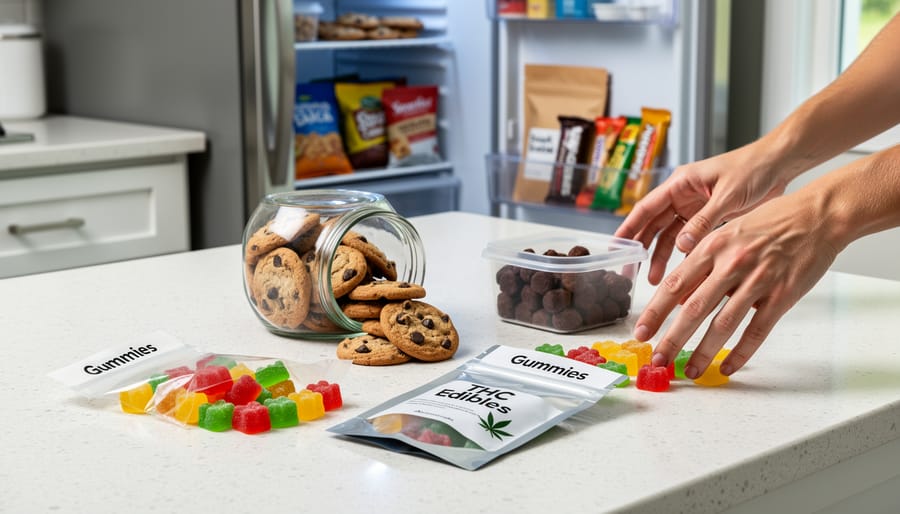
Picture this: it’s a hectic Tuesday afternoon, and your seven-year-old spots what looks like a bag of rainbow gummy bears on the kitchen counter. They pop a handful in their mouth before you can blink. Except those weren’t regular gummies, they were Delta-8 THC edibles that looked identical to the fruit snacks sitting right next to them.
This scenario plays out more often than most parents realize. Gummies, chocolates, brownies, and cookies infused with hemp-derived cannabinoids are manufactured to look, smell, and taste exactly like their non-infused counterparts. Many products feature bright colors, fruity flavors, and fun shapes deliberately designed to be appealing, which makes them irresistible to kids. The FDA has repeatedly warned about THC edibles mistaken for treats noting that children simply can’t distinguish between regular candy and infused products.
Unlike vape pens or tincture bottles that clearly look like adult products, a CBD gummy bear or Delta-9 chocolate chip cookie sends no visual warning signals to a curious child. That’s what makes edibles the highest-risk format when kids are around.
What the Poison Control Data Shows
Between 2017 and 2023, poison control centers across the U.S. saw pediatric cannabis exposures jump by over 1,400%, with hemp-derived products playing an increasingly significant role. The American Association of Poison Control Centers reported that children under six accounted for roughly 80% of these cases, with most involving edible products that kids mistook for regular snacks.
Emergency room visits follow a predictable pattern: peaks occur during evenings and weekends when families are home together and products are more likely to be out during use. The most common scenario? A parent sets down a gummy or chocolate while distracted by another child, a phone call, or household task. Within that brief window, a curious toddler finds what looks exactly like candy.
What’s particularly concerning is that many parents don’t immediately recognize the symptoms, drowsiness, unsteady walking, or unusual behavior, as cannabis-related, which delays seeking help. Hospital data shows that while most children recover fully within hours, the stress and medical intervention required are entirely preventable with consistent storage habits.
Storage Solutions That Actually Work for Busy Parents
Age-Specific Strategies
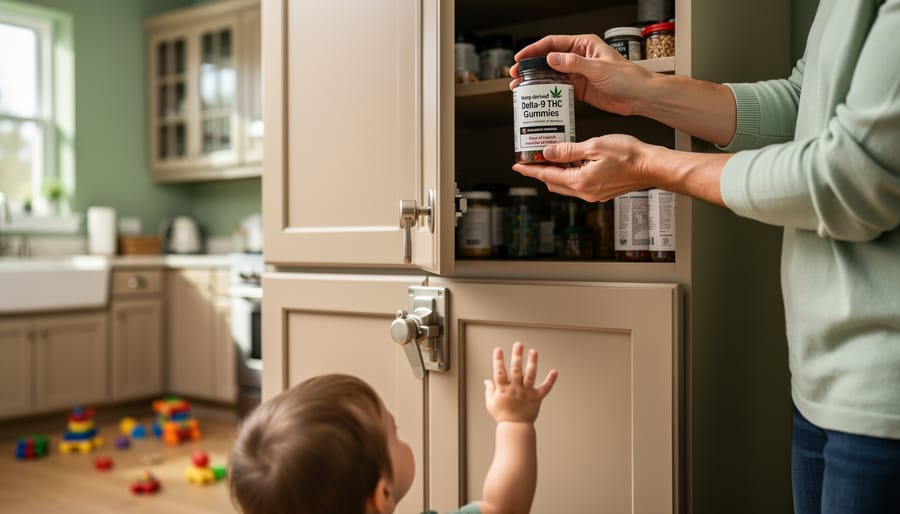
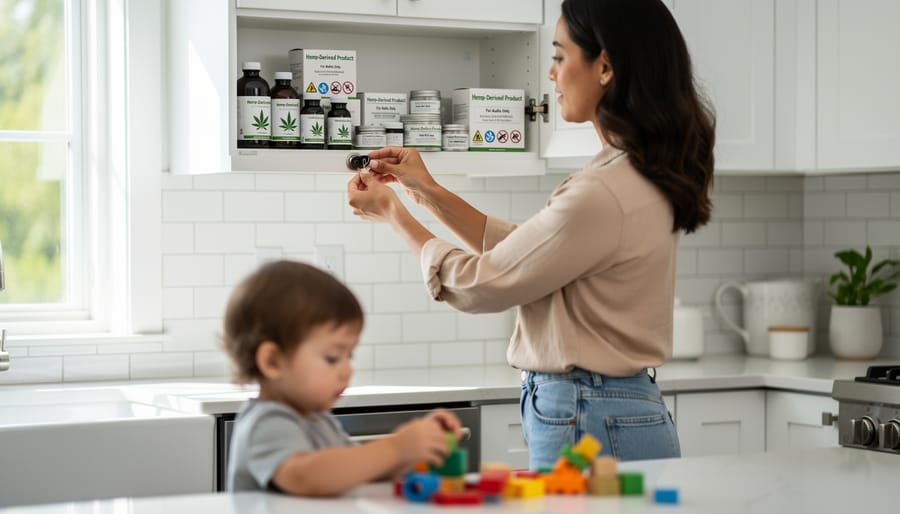
Your storage strategy needs to evolve as your kids grow because a locked cabinet that works for a three-year-old won’t cut it when you’re dealing with a curious twelve-year-old.
For toddlers and preschoolers (ages 1-5), physical barriers are your best friend. High shelves aren’t enough, these little climbers will surprise you. Lock everything in a medicine cabinet or use a lockbox stored well out of reach. At this age, they’re putting everything in their mouths and can’t distinguish your gummies from their fruit snacks. One mom in our community shared that she keeps her products in a locked toolbox in her closet after her daughter climbed onto the bathroom counter. If you use these products to manage fatigue during the day, never leave them sitting out while you’re using them. Treat them like prescription medication.
Elementary-aged kids (6-11) can read labels and understand basic rules, but they’re also naturally curious and might investigate if they know where you keep something interesting. Locked storage remains important, but now you can also start simple conversations. You don’t need lengthy explanations, just clear boundaries. “These are mom’s wellness products, like medicine, and they’re only for adults.”
With teens (12+), your approach shifts toward open communication rather than just physical barriers. They’ve likely heard about cannabis products from friends or online. Locked storage still matters, but so does honesty. Teens respect straightforward conversations more than vague warnings. Acknowledge these products exist in your home, explain why they’re adult-only, and invite questions without judgment.
Having the Conversation: Talking to Kids About These Products
When Teens Ask Questions
Teenagers are perceptive, and they’ve likely already noticed your products or heard conversations about hemp-derived cannabis at school or online. When my friend’s 14-year-old asked about the CBD gummies in the cabinet, she realized dodging the question would only fuel more curiosity.
Be direct about what the products are and why you use them, whether for sleep, anxiety, or pain management. Teens can handle honest explanations: “These contain compounds from hemp plants that help adults manage stress, similar to how some people take prescription medications.” Acknowledge that yes, some products contain small amounts of THC, which is why they’re specifically for adults.
Listen to their questions without getting defensive. If they mention friends whose parents use these products, validate their curiosity rather than shutting down the conversation. This openness makes you the trusted source of information rather than forcing them to rely on unreliable peer knowledge.
Set clear expectations: these products are adult-only, not because they’re “bad,” but because developing brains react differently to cannabinoids. Frame it similarly to alcohol or prescription medications, legal for adults, inappropriate for teens, with real consequences if misused.
What to Do If Your Child Gets Into Your Products
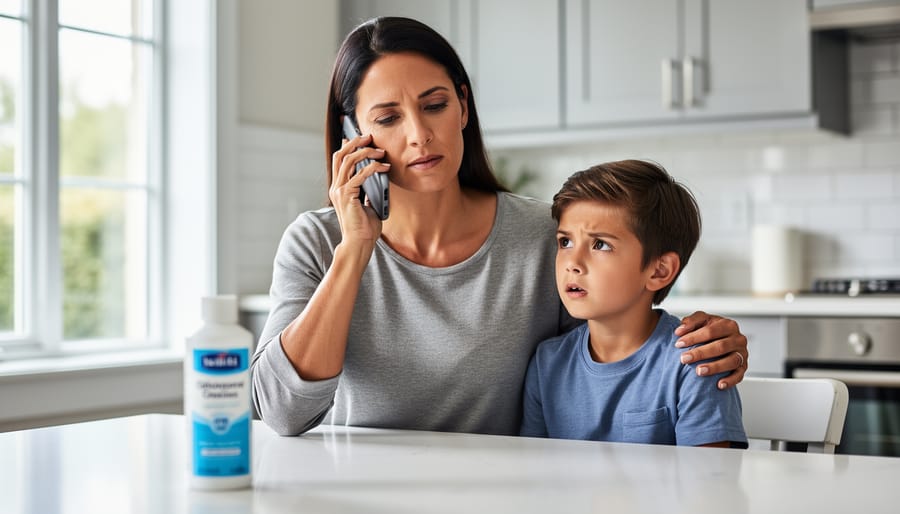
If your child gets into your hemp-derived cannabis products, your immediate response matters more than panicking. Here’s exactly what to do:
- Stay calm and assess the situation. Check what product they accessed, how much is missing, and when they likely consumed it. Your clarity helps medical professionals respond effectively.
- Call Poison Control immediately at 1-800-222-1222. They’re available 24/7 and can determine whether your child needs emergency care or can be monitored at home. Have the product packaging ready, they’ll need ingredient information, THC content, and the estimated amount consumed.
- Do not induce vomiting or give your child food or water unless Poison Control specifically instructs you to do so.
- Watch for symptoms. Drowsiness, confusion, difficulty walking, rapid heart rate, or vomiting typically appear within 30 minutes to two hours. Severe symptoms like difficulty breathing or loss of consciousness require calling 911 immediately.
- Be completely honest with healthcare providers. They’re not there to judge your choices, they need accurate information to treat your child properly. Withholding details about THC content or product type can delay appropriate care.
Keep your child comfortable and supervised while waiting for guidance or during observation. If they’re anxious or scared, practice breathing exercises or calm together with gentle reassurance. Most accidental pediatric exposures to hemp-derived cannabis resolve without lasting effects when addressed promptly.
Document everything: what they consumed, approximately how much, timing, and symptoms. This information helps doctors and serves as a reminder to adjust your storage approach afterward. Remember, accidents happen even to careful parents, what matters is responding quickly and honestly.
Choosing Safer Products When You Have Kids at Home
When you’re shopping for hemp-derived cannabis products and have children at home, the form factor matters just as much as what’s inside. Skip the gummies, chocolates, and anything that resembles candy or regular snacks. I learned this the hard way when my friend’s six-year-old mistook her Delta-9 gummies for fruit snacks despite the child-resistant bag (which her older sibling had left partially open). Instead, look for capsules, tinctures with droppers that don’t appeal to kids, or topical creams that clearly look like adult wellness products.
Child-resistant packaging is non-negotiable, but recognize it’s not childproof, it just buys you time. Capsules offer a huge advantage because they don’t smell appealing and look like any other supplement. Tinctures work well too, especially the unflavoured versions that taste medicinal rather than fruity. If you prefer vaping, that’s inherently less accessible to young children than edibles sitting in a pantry.
When browsing products, ask yourself: if this were sitting on my counter, would my child mistake it for something they’re allowed to have? That simple test steers you toward formats that respect kid-safe boundaries without requiring constant vigilance. Some brands specifically market “parent-friendly” packaging with opaque bottles, plain labels, and no cartoon imagery, seek those out. Your choice of product format is your first line of defense, well before storage strategies even come into play.
When Friends and Family Visit: Protecting Your Kids Beyond Your Own Products
You’ve carefully stored your own products, but what happens when Aunt Marie shows up with a tote bag full of everything from her purse to her latest wellness finds? Your friends and family may use hemp-derived products too, and they might not think twice about tossing a gummy container on the coffee table or leaving a tincture in an open purse on your kitchen counter.
This isn’t about being the paranoid host who searches everyone at the door. It’s about protecting your kids from products that guests genuinely don’t realize could be accessible. Most people who don’t live with children simply aren’t thinking about little hands reaching into coat pockets or teenagers scrolling through a visitor’s bag looking for gum.
The conversation starts before anyone arrives. When you’re coordinating visits with close friends or family you know use these products, mention it casually: “Hey, just a heads up, we’re really careful about keeping anything with THC or CBD locked up since the kids got so curious lately. If you’re bringing anything like that, just let me know and I can stash it somewhere safe while you’re here.” Most people appreciate the reminder rather than feeling accused.
For guests who arrive unexpectedly or might not mention what they’re carrying, a simple check-in works: “Do you have anything in your bag or coat that needs to go up high? We’ve been extra careful lately.” You’re not demanding to rifle through their belongings, you’re giving them the chance to be proactive. If a guest seems defensive, remind them gently that their own medication or supplements are probably in childproof bottles for a reason, and hemp products deserve the same caution.
When someone does leave a product out, address it immediately and matter-of-factly. Grab it, hand it back, and say, “Let’s keep this tucked away, the kids are into everything right now.” No lecture needed. If it happens repeatedly, you might need a firmer boundary: “I know it seems like overkill, but we really can’t have these accessible when the kids are around. Can you keep it in your car or let me lock it up for you?”
Looking after your kids and using hemp-derived cannabis products aren’t at odds with each other. You’re not choosing between being responsible and taking care of yourself, you’re simply adding another layer of awareness to your parenting routine, just like you do with cleaning supplies, medications, or sharp kitchen tools.
The difference between safe use and a scary emergency often comes down to three simple habits: storing products out of reach, having honest conversations with your kids, and knowing what to do if something goes wrong. These aren’t complicated measures. They’re the same common-sense approaches you already apply to countless other aspects of family life.
What works in your home might look different from what works in someone else’s, and that’s completely okay. Maybe you’ve found a storage solution that’s brilliant for your family setup, or you’ve figured out how to talk about these products with your teenager in a way that really resonated. Share it. Other parents in our community are navigating these same questions, and your experience might be exactly what another family needs to hear. We’re all learning as we go, and there’s real value in that shared wisdom.