

The single biggest reason virtual schooling overwhelms parents is role confusion. You’re suddenly expected to be teacher, tech support, motivator, and lunch lady all at once, on top of your actual job and household responsibilities. No wonder you’re exhausted.
Here’s your quickest diagnostic: if you find yourself sitting next to your child for most of the school day, constantly redirecting their attention or troubleshooting login issues, you’ve identified the core problem. You’re doing work that traditional schools handled with entire teams of professionals, and you’re doing it without training, preparation, or backup.
This isn’t about your capability as a parent. Virtual schooling fundamentally redistributes labor from schools to homes, and that shift hits hardest when boundaries blur. One mom I know described it perfectly: “I used to send my kids to school and go to work. Now I’m trying to do both in the same room, at the same time, and feeling like I’m failing at everything.”
The good news? Most virtual schooling stress comes from a handful of fixable pressure points. Once you pinpoint whether your struggle is tech chaos, attention management, schedule conflicts, or unclear expectations from the school, you can target solutions that actually lighten your load rather than just adding more to your to-do list.
This guide walks you through identifying your specific stress triggers, then gives you step-by-step fixes that other parents have tested in real kitchens and makeshift home offices. We’ll also cover when to push back on school demands and how to prevent burnout before it derails your entire household. You deserve support, not another lecture about screen time limits.
Is Virtual School Stress Normal? What Parents Are Experiencing
If you’ve found yourself crying in the bathroom between Zoom classes, snapping at your kids over missed assignments, or lying awake at night worrying whether you’re ruining your child’s education, you’re not alone. Virtual school stress is real, widespread, and absolutely normal.
Most parents experience a cluster of stress symptoms that show up in surprisingly similar patterns. You might recognize the physical exhaustion of being “on” all day, monitoring screens and answering questions while trying to work. There’s the mental load of tracking multiple platforms, passwords, assignment due dates, and tech glitches. And then there’s the emotional toll: guilt over not doing enough, frustration when your child struggles, resentment at losing your work time, and anxiety about falling behind.
Many parents describe feeling like they’re constantly failing at something. When you focus on your work, you feel guilty about not helping your child. When you help your child, you fall behind on work deadlines. You start the day with good intentions and end it feeling defeated, wondering why you can’t seem to get any of it right.
The work-life boundary has essentially disappeared. Your kitchen table is now a classroom, office, and dining room all at once. You’re interrupted constantly, can’t complete tasks without fragmenting your attention, and never truly finish the workday or the school day because they bleed endlessly into each other.
This isn’t happening because you lack organizational skills or patience. Virtual schooling has fundamentally changed the parent’s role in ways that create genuine, legitimate stress. Recognizing these symptoms isn’t pessimistic; it’s the first step toward addressing them effectively.
Why Virtual Schooling Creates Unique Pressure for Parents
You’re Suddenly Wearing Three Hats at Once

Virtual schooling doesn’t just add one new responsibility to your plate, it multiplies your roles in ways that feel impossible to juggle. You’re not just a parent anymore. You’re the teacher who needs to understand the curriculum well enough to explain fractions for the third time. You’re the tech support specialist troubleshooting login issues at 8:47 AM when class started at 8:45. And you’re the motivator coaxing a resistant child through yet another Zoom session while your own work deadline looms.
These roles clash constantly. Your boss schedules a meeting right when your daughter needs help navigating her science project. You’re explaining a math concept when the WiFi drops and you’re suddenly rebooting the router instead. Your child melts down over an assignment while your inbox fills with urgent messages.
The cognitive load is staggering. Each role requires different skills and mental energy, and you’re switching between them dozens of times per day. Meanwhile, regular parenting, meals, laundry, bedtime, still needs to happen. It’s not that you can’t handle being a teacher or tech support individually. It’s that doing all three simultaneously, without training or preparation, while maintaining your own work and life, creates an unsustainable pressure that traditional schooling never demanded.
The Technology Tightrope
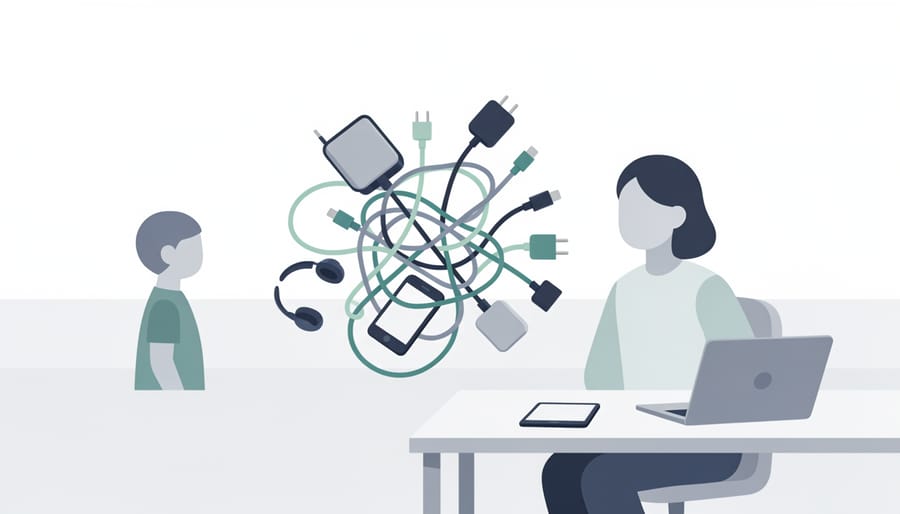
You’ve likely spent more time resetting passwords, troubleshooting frozen screens, and figuring out why the microphone won’t unmute than you ever imagined. Virtual school transforms parents into de facto IT departments, creating a relentless cycle of technical problem-solving that never appears in any job description. Research on parents’ technology challenges confirms what you already know: managing multiple platforms, devices, and logins while simultaneously helping your child navigate them creates significant stress.
The problem isn’t just fixing issues as they arise. You’re the constant intermediary between your child and the technology, translating teacher instructions, managing three different learning platforms with separate logins, and being on-call whenever something breaks. Your child can’t just raise their hand for help, they interrupt your meeting. The WiFi drops during a test. The assignment won’t upload. Each technical hiccup pulls you away from whatever you were doing, fragmenting your attention and making it impossible to maintain any productive flow in your own work or household tasks.
Loss of Social and Emotional Support Systems

When your child attends school in person, teachers naturally pick up on mood shifts, friendship struggles, and learning frustrations throughout the day. They redirect anxious moments, facilitate peer conflicts, and provide emotional coaching in real time. That entire layer of social-emotional support vanishes in virtual school.
Now you’re the one noticing your child’s withdrawal during a group breakout session. You’re mediating the hurt feelings from a misunderstood chat message. You’re the cheerleader when they feel invisible on mute, the counselor when they miss their friends, and the social coordinator trying to manufacture connection outside screen time.
This emotional labor is constant and exhausting. Without the natural buffer of teachers and school counselors who know your child and can intervene, every social and emotional need lands squarely on you. You’re not just supporting homework, you’re replacing an entire ecosystem of adult mentors and peer interactions that used to help your child navigate their day. The weight of being your child’s primary emotional support system, on top of everything else, contributes significantly to virtual school burnout.
The Flexibility Myth
Virtual schooling is often sold as the flexible option, learn anytime, anywhere, at your own pace. But most parents discover a different reality: virtual school doesn’t mean less involvement. It means different involvement, and often more of it.
The “flexibility” usually refers to the student’s schedule, not yours. Your child might complete assignments at 10 PM instead of 3 PM, but someone still needs to be available when they hit a wall with fractions or can’t figure out the submission process. That flexibility often translates to being on call throughout the day rather than having predictable school hours when you’re genuinely free.
Many virtual programs also have rigid attendance windows. Live sessions at specific times. Mandatory check-ins. Assignment deadlines that don’t actually flex. You’re managing a hybrid schedule that combines the worst of both worlds: the structure of traditional school without the independence, plus the responsibility of homeschooling without true schedule control.
The workload lands differently too. Instead of homework after school, there’s troubleshooting during school. Instead of occasional parent-teacher conferences, there are daily questions about logging in, finding materials, or understanding instructions written for adults. The promise was freedom; the reality is constant availability without the containment that a physical school day provides.
How to Reduce Virtual School Stress: Step-by-Step Solutions
Step 1: Set Realistic Boundaries and Expectations
The first and most powerful step is giving yourself permission to be “good enough” instead of perfect. Virtual schooling doesn’t require you to replicate a classroom at home or master every subject your child studies. Start by writing down what you can realistically handle each day, maybe it’s checking in during two lessons, troubleshooting one tech issue, and reviewing completed work. That’s your actual capacity, not the idealized version.
Next, communicate these boundaries clearly. Tell your child’s teacher which hours you’re available for support and when you’re in work meetings. Let your family know that “school time” doesn’t mean you’re free for interruptions, but also that you won’t be hovering over every assignment. Many parents find that adopting virtual learning strategies from others who’ve made it work helps them set more realistic expectations from the start.
Finally, identify what you can let go. Your child might not complete every optional activity. The background of their video calls might show laundry. Their handwriting might be messier than in-person work. None of this defines your worth as a parent or determines their educational success.
Step 2: Create a Sustainable Daily Structure

A rigid schedule sounds helpful until your kindergartener has a meltdown at 9:15 or your internet crashes mid-lesson. Instead of a minute-by-minute timetable, build a rhythm with flexible blocks. Start with your non-negotiables: live class times, your own work meetings, and mealtimes. Then create loose morning, midday, and afternoon blocks for schoolwork, leaving 15-minute buffers between activities for transitions, tech issues, or bathroom breaks.
Build in pattern breaks every 60-90 minutes, short movement, a snack, or five minutes outside. These aren’t rewards for finishing work; they’re essential resets that prevent everyone from hitting a wall by noon. Many parents find that protecting lunch as a true break (not eating while supervising math) makes afternoon sessions actually possible. Planning simple busy parent meals in advance removes one decision from your overloaded plate.
Accept that some days the structure will collapse entirely, and that’s fine. The goal isn’t perfection, it’s reducing the constant decision-making that drains you. When your child knows “morning block is usually 9 to 11” rather than “math at 9:00, reading at 9:45,” there’s less negotiating and fewer power struggles when things inevitably shift.
Step 3: Solve the Tech Overwhelm
Technology stress often snowballs when you’re managing it reactively. Create one master document, whether it’s a Google Doc, notebook, or phone note, listing every platform your child uses, login credentials, teacher contact info, and the direct links to each learning portal. Keep it bookmarked or pinned where you can access it immediately.
For password chaos, use your browser’s built-in password manager or a simple family password system (never store sensitive banking info this way, but school logins are fair game). When tech issues arise, try the parent trifecta: refresh the page, log out and back in, restart the device. This solves about 70% of problems without calling anyone.
Set boundaries on your tech support hours. If it’s not urgent, batch troubleshooting for specific times rather than jumping every time something glitches. Create a simple troubleshooting checklist your child can run through independently before asking for help, even young kids can learn “try these three things first.” Many parents find additional K-12 virtual tips helpful for reducing daily friction.
For recurring technical problems, screenshot error messages and document exactly when they happen. This makes conversations with school IT support infinitely faster and prevents you from becoming the endless intermediary.
Step 4: Share the Load
You can’t do this alone, and you shouldn’t have to. Virtual schooling works better when multiple people pitch in, even in small ways.
Start with your partner or other adults in the household. Divide responsibilities by strength and schedule rather than splitting everything 50/50. Maybe one person handles morning tech setup while the other manages afternoon check-ins. One reviews assignments while the other troubleshoots platform issues. Write down who owns what so nothing falls through the cracks.
Don’t overlook older siblings. A middle schooler can help a younger sibling log into Zoom or find the assignment page. A high schooler might quiz a third grader on spelling words. Frame it as teamwork, not babysitting, and keep asks age-appropriate.
Tap your extended network. Trade off with another virtual school parent for focused homework help sessions. Ask a tech-savvy friend or relative for a monthly troubleshooting call. Some retired teachers offer virtual tutoring or assignment review.
The key is being specific about what you need. “Can you help?” gets vague offers. “Can you run the morning routine on Tuesdays?” gets real support.
Step 5: Rebuild Connection Points
Virtual schooling isolates your child, but it also cuts you off from the informal parent networks that used to happen naturally at drop-off and pickup. Those quick conversations in the school parking lot weren’t just small talk, they were stress relief, problem-solving sessions, and emotional support rolled into casual moments.
Rebuild those connection points deliberately. Schedule virtual or outdoor meetups with other virtual school families where kids can interact while parents swap solutions and vent frustrations. Create a group chat specifically for virtual school parents to share quick wins, tech fixes, or just “is anyone else dealing with this?” reality checks.
For your child, prioritize one consistent social activity each week, sports, art class, park meetups, something that doesn’t require your constant supervision. When kids get their social needs met elsewhere, they stop turning to you for every emotional need, which lightens your load considerably.
Share shareable routines and schedules with other families so kids can work together on assignments or projects via video chat. This gives them peer accountability while you step back from being their only motivator and social outlet.
Step 6: Protect Your Own Well-being
You can’t pour from an empty cup, but when you’re managing virtual school, finding even five minutes feels impossible. Start with micro-moments: ten deep breaths while your child works independently, or stepping outside for two minutes between classes. Protect your sleep schedule as fiercely as you guard school start times, chronic exhaustion makes every problem worse, and applying sleep deprivation tips can help you function better. If you can’t carve out large blocks, stack small resets throughout the day. Drink water, eat actual meals, and say no to non-essential obligations without guilt. Your well-being isn’t selfish, it’s the foundation that makes virtual schooling sustainable for everyone.
Preventing Burnout Before It Happens
Build Your Support Network Now
The difference between managing virtual school stress and drowning in it often comes down to having other parents who understand what you’re going through. Start building your network before you’re in crisis mode.
Join your school’s parent communication channels first, Facebook groups, Slack channels, or WhatsApp groups where virtual families connect. Introduce yourself and ask one specific question about something you’re struggling with. You’ll usually find several parents dealing with the same issue.
Look for virtual school parent meetups in your area, either online or in-person. Many libraries and community centers run them. If none exist, create a simple group yourself, post in local parenting forums or your school’s communication channel suggesting a monthly coffee chat.
Exchange contact information with two or three parents whose kids are in similar grades. Text them when you discover a helpful app or have a tech question. Small, regular contact builds the foundation so you’re comfortable reaching out when bigger challenges hit.
Set up one recurring check-in, even if it’s just a fifteen-minute video call every other week with one other parent. Having that scheduled touchpoint prevents isolation from sneaking up on you.
Schedule Regular Reset Points
Instead of waiting until you’re completely drained to address virtual school stress, schedule regular “pressure release” moments throughout the year. Think of these as mandatory check-ins with yourself and your family, not optional luxuries you’ll get to “someday.”
Mark three specific dates in your calendar right now, perhaps after the first month, at winter break, and mid-spring. On each date, sit down for 30 minutes and honestly assess what’s working and what’s killing you. Is the morning routine a disaster? Has one platform become a constant source of frustration? Are you sacrificing too much sleep to keep up? These reset points catch small problems before they become insurmountable crises.
During each reset, make one concrete change. Maybe you shift your child’s start time by 30 minutes, drop the least essential extracurricular, or hand off tech troubleshooting to your partner on Tuesdays and Thursdays. Small adjustments compound over time.
Build in actual breaks too, not just weekends, but planned “low-gear weeks” where you scale back to bare minimum requirements and protect your sleep. Some families use the week after report cards as a recovery period with simplified schedules and earlier bedtimes for everyone.
The goal isn’t perfection at every checkpoint. It’s preventing that slow accumulation of stress that eventually leads to complete burnout. These reset points give you permission to adapt rather than just endure.
How to Fix It Step by Step
Start by identifying your biggest stressor. Review last week and pinpoint the one thing that triggered the most frustration or exhaustion. Was it morning tech meltdowns? Constant interruptions during work calls? Feeling chained to the computer all day? Name it specifically.
Next, tackle that single pain point with one concrete change. If tech issues drain you, spend 30 minutes this weekend creating a simple troubleshooting guide your child can follow before asking for help. If work interruptions are killing you, establish a “closed door” signal and explain to your child when they can interrupt versus when they need to wait.
Then set one boundary that protects your time or energy. Maybe you stop checking every submitted assignment. Perhaps you declare Fridays “minimal involvement” days where your child works more independently. Choose something you can actually enforce.
After implementing your first fix, wait three days before adding another change. Stacking solutions too quickly creates new stress. Let your family adjust to the new system, observe what improves, then address the next priority stressor using the same process.
At-a-Glance Details
| Stress Source | Quick Fix (This Week) | Long-Term Strategy |
|---|---|---|
| Tech Issues | Create a one-page troubleshooting cheat sheet with passwords and basic fixes | Set up a weekly tech check-in with school IT contact |
| Multiple Roles | Block out one hour where you focus only on work, not teaching | Establish clear time blocks with visual cues for when you’re available |
| Isolation | Text three other virtual school parents to check in | Join or form a weekly virtual parent support group |
| Unclear Expectations | Ask teacher for top three priorities this month | Schedule quarterly meetings to align on realistic goals |
| No Breaks | Set a timer for one 15-minute break today where kids self-manage | Build daily independent work time into the schedule |
This breakdown helps you match immediate actions to your biggest pain points without waiting for a complete system overhaul. Pick one stress source that’s hitting hardest right now and start with the quick fix today. You can layer in the long-term strategies as you build momentum and find what works for your specific situation. The goal is progress, not perfection, and even small changes can create breathing room in your day.
Common Questions About Virtual School Parent Stress
How do I balance my full-time job with managing virtual school?
Start by being honest with your employer about your constraints and asking for flexible core hours if possible. Then create non-negotiable work blocks where your child works independently on activities you’ve prepped, and use early mornings or evenings for tasks requiring deep focus. Accept that some days you’ll do the minimum in both areas, and that’s genuinely okay.
What if I have multiple kids doing virtual school at different grade levels?
Stagger their schedules so you’re not simultaneously needed by everyone, and assign older children a “helper” role for younger siblings during specific activities. Create a visual schedule each child can follow independently, and rotate your focused attention in 20-30 minute blocks rather than trying to oversee everyone constantly.
How do I know if I need to ask the school for help or if I’m just not trying hard enough?
If you’re consistently unable to meet the school’s expectations despite genuine effort, or if the stress is affecting your physical or mental health, you need help, not more effort. Reach out when you notice the same problems recurring for more than two weeks, when your child is falling significantly behind, or when you find yourself crying or losing your temper regularly.
Does feeling this stressed mean virtual school isn’t right for our family?
Not necessarily. Most families experience significant stress in the first few months as they figure out systems and routines. If you’re still overwhelmed after implementing the strategies in this article and giving it 8-12 weeks, then it’s worth evaluating whether the format truly works for your situation. Stress alone isn’t the deciding factor, but persistent, unmanageable stress that doesn’t improve with adjustments might be.
These questions come up repeatedly in virtual school parent communities because they hit the core tensions most families face. The guilt around asking for help is particularly strong among parents who chose virtual schooling, as if struggling means they made the wrong choice. But needing support or adjustments doesn’t invalidate your decision. It just means you’re navigating a genuinely difficult situation that most parents weren’t trained for.
Pay attention to how you phrase requests to teachers and administrators. Instead of apologizing for struggling, frame it as problem-solving: “I’ve noticed my daughter needs more support with math than I can provide during work hours. What resources or modifications are available?” This positions you as a partner in your child’s education rather than someone who’s failing at their job.
If you’re wondering whether other parents feel this way, the answer is almost certainly yes. The isolation of virtual schooling often means you don’t see other families struggling, which makes your own stress feel like a personal shortcoming. It’s not.
Virtual schooling is genuinely hard on parents, and if you’ve felt overwhelmed, exhausted, or stretched impossibly thin, you’re not imagining it. The structure of virtual education shifts responsibilities onto families in ways traditional schooling never did, and recognizing that truth is the first step toward managing the stress rather than drowning in it.
You don’t need to implement every strategy at once. Pick the one step that resonates most with your current pain point, whether that’s tech overwhelm, boundary-setting, or rebuilding your own well-being, and start there. Small shifts compound over time, and giving yourself permission to adjust gradually removes the pressure to fix everything immediately.
What’s working for your family? What strategies have helped you protect your sanity while supporting your child’s virtual education? Share your experiences in the comments below. Other parents navigating this same challenge will benefit from your hard-won insights, and you might discover new approaches you haven’t considered yet. We’re all figuring this out together, one manageable step at a time.