

You can reclaim functional sleep as a new parent by implementing a strategic rotation schedule, optimizing your baby’s sleep environment, and accepting help without guilt. Most parents see meaningful improvement within 2-3 weeks of consistent changes, though every baby’s timeline differs.
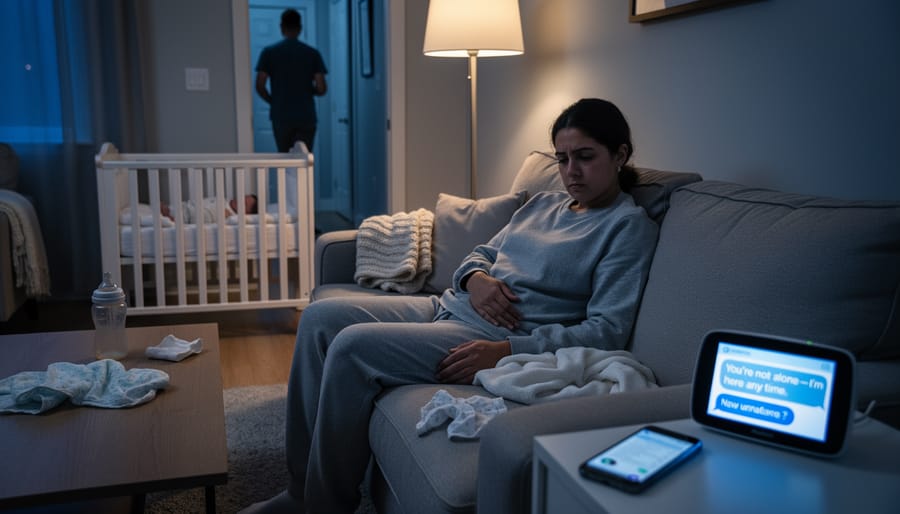
I remember standing in my kitchen at 3 a.m., having forgotten why I walked there in the first place, tears streaming down my face because I’d been awake for what felt like my entire adult life. My partner found me staring at the refrigerator, holding a bottle of orange juice in one hand and the TV remote in the other. That was week three with our daughter, and I genuinely wondered if I’d ever feel human again.
The exhaustion new parents face isn’t just tiredness. It’s a bone-deep fog that affects your memory, judgment, emotional regulation, and physical health. Studies show that new parents lose an average of 44 days of sleep during their baby’s first year, with the most severe deprivation hitting between weeks 2 and 12. You’re not imagining it, and you’re definitely not failing. Your body is running on fumes while learning to care for another human who hasn’t discovered circadian rhythms yet.
But here’s what changed everything for us: treating sleep as a survival resource that needed active management, not something that would magically happen when we were tired enough. The strategies I’m sharing aren’t about getting your baby to sleep through the night (though some babies do get there faster with these approaches). They’re about you getting enough rest to function safely and maintain your mental health during this intense phase.
This is temporary. I promise you’ll sleep again. Let’s make tonight a little better than last night.
Understanding Sleep Deprivation in New Parents
Sleep deprivation for new parents means more than feeling a bit tired. It’s functioning on fragmented sleep cycles of 90 minutes or less, night after night, while your body desperately craves the deep REM sleep it needs to repair and recharge. Most new parents lose between one and three hours of sleep per night during the first year, but it’s the broken nature of that sleep that makes it so brutal.
Your newborn’s stomach is tiny, roughly the size of a cherry at birth, growing to walnut-sized by two weeks. This biological reality means feeding every two to three hours around the clock. By the time you feed, burp, change, and settle your baby, you might have 45 minutes before the cycle starts again. One dad described it perfectly: “I’d stand at the fridge staring at the milk, completely blanking on why I was there. My wife found me trying to put the TV remote in the diaper bin.”
That mental fog is real. Sleep deprivation impairs cognitive function similarly to being legally drunk. You’re making constant decisions about feeding, health, and safety while operating on a fraction of your usual mental capacity. Your reaction time slows, your patience shrinks, and everything feels harder than it should.
The first three to four months are typically the roughest, with most babies beginning to sleep in longer stretches between four and six months. Some parents see improvement sooner, others later. What you’re experiencing, that bone-deep exhaustion and occasional feeling of being completely overwhelmed, is a normal response to an abnormal sleep situation. You’re not failing. Your body is simply running on fumes while performing the hardest job in the world.
Tools and Materials You’ll Need
Managing sleep deprivation starts with having the right tools at your disposal. You don’t need everything at once, but assembling these essentials makes a real difference when you’re running on fumes.
Physical Environment Tools
Blackout curtains transform any room into a sleep sanctuary, helping you fall asleep during oddly-timed naps when sunlight screams “stay awake.” They’re especially valuable for the parent taking the morning shift who needs to sleep past sunrise. White noise machines mask the doorbell, older siblings playing, and street noise that would otherwise jolt you awake after twenty precious minutes of sleep. Choose one with a continuous setting rather than a timer, you need consistency, not another device to reset at 3 AM.
A quality baby monitor with clear audio gives you permission to actually rest instead of straining to hear every breath. The 2026 models with sleep pattern tracking and movement detection offer peace of mind without constant checking. For feeding sessions, a genuinely comfortable chair with proper back support matters more than you’d think when you’re spending hours there nightly.
Daily Function Supports
- Meal prep containers – batch-cook on good days so exhausted-you just reheats real food
- Sleep tracking apps for 2026 – visualize your actual sleep patterns to identify windows for rest
- Insulated water bottle – hydration affects energy; keep water accessible everywhere
- Ready-made meal delivery service – outsource cooking when you’re barely functional
- Reliable coffee maker with timer – wake up to ready caffeine without extra steps
Human Support Systems
Your most critical “tool” is people. Line up specific helpers before desperation hits: a friend who brings dinner weekly, a family member for Sunday afternoon baby duty, a postpartum doula, or a mother’s helper for a few hours. Write down their names and when they’re available. When you’re sleep-deprived, remembering who offered help feels impossible. Having a written list means you’ll actually make the call instead of suffering alone because you’re too foggy to think of options.
Safety Considerations When Sleep-Deprived
Sleep deprivation affects more than your mood, it impairs judgment and physical coordination in ways that can put you and your baby at serious risk. Knowing where the danger zones are helps you protect your family even when you’re running on empty.
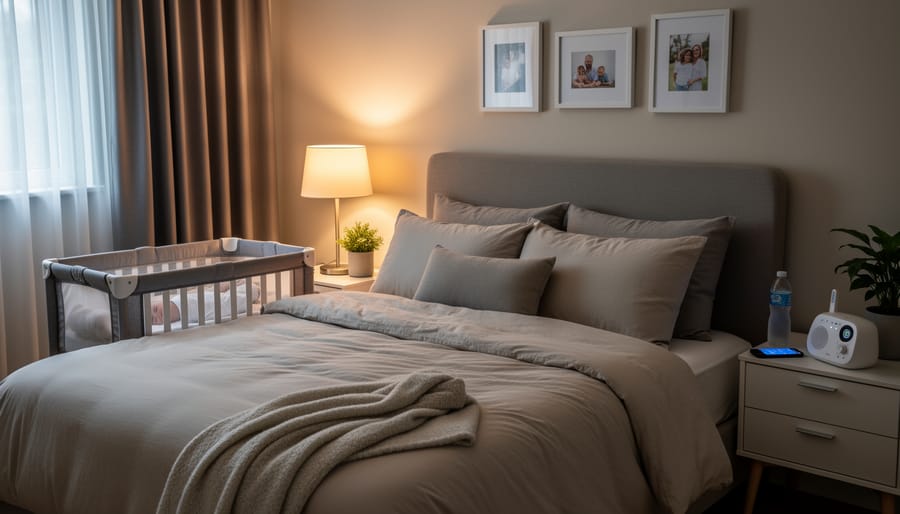
The most critical safety rule remains non-negotiable no matter how exhausted you are: Back to sleep every time on a firm surface, without loose bedding. When you’re barely conscious at 3 a.m., it’s tempting to fall asleep holding your baby or bring them into your bed, but this significantly increases suffocation risk. If you feel yourself dozing while feeding, move your baby back to their crib immediately, even if it wakes them. Consider setting a gentle alarm for 20 minutes as a backup.
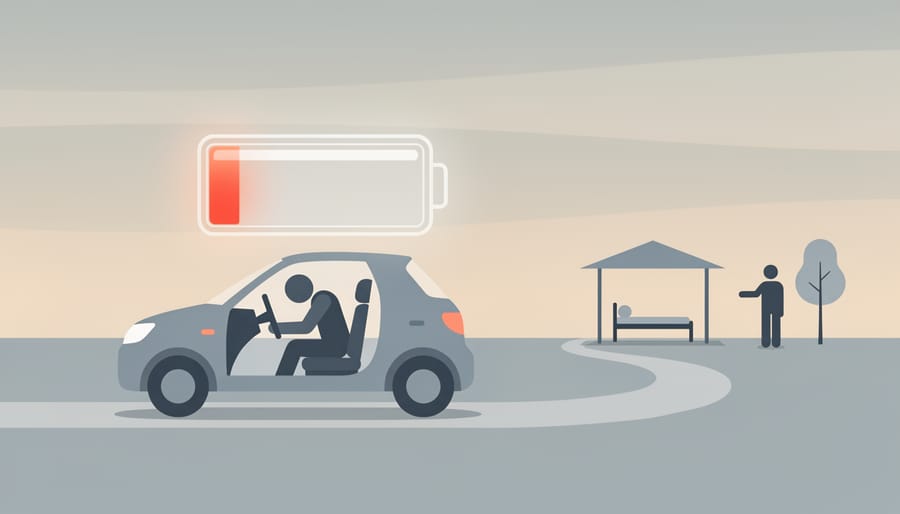
Driving while sleep-deprived is as dangerous as driving drunk. If sleep-deprived, you can’t control microsleep episodes where your brain shuts off for seconds at a time. If you’re debating whether you’re too tired to drive, you probably are. Ask someone else, call a rideshare, or reschedule. That pediatrician appointment can wait an hour if it means everyone arrives safely.
Review these safe sleep tips regularly, because exhaustion erodes your ability to follow even familiar routines. Write down your safety checklist and post it in the nursery. When you’re too tired to think straight, you need systems that work automatically.
Step-by-Step Sleep Management Strategies
Creating Your Sleep Shift System
The most effective way to survive those early weeks is to split night shifts into clear blocks where one person is fully on duty while the other truly sleeps. This works whether you have a partner, a family member staying over, or a postpartum doula.
Here’s a practical schedule that many parents swear by: Partner A handles 9 PM to 2 AM while Partner B sleeps in another room (earplugs in, phone off). At 2 AM, they switch. Partner B takes over until 7 AM while Partner A gets uninterrupted rest. This gives each person a solid five-hour stretch, which makes a huge difference compared to both of you waking every two hours all night.
If you’re breastfeeding, the off-duty partner can still help by bringing baby to you, handling diaper changes, and settling baby back to sleep afterward. Pump a bottle or two so your partner can do some feeds independently during their shift.
The key to making this work is real communication. Before bed, the on-duty partner needs everything within reach: diapers, wipes, bottles, burp cloths, phone charger. The off-duty partner needs permission to actually sleep without guilt. Text updates only for emergencies.
On nights when you’re solo parenting, try modified shifts where you’re “on call” but sleeping in between wake-ups, then catch up with an earlier bedtime the next night or a weekend nap when help arrives.
Maximizing Sleep Quality in Short Windows
When your baby finally drifts off, you have maybe 20 minutes before your brain convinces you to check your phone, start the laundry, or worry about tomorrow’s pediatrician appointment. Here’s how to actually fall asleep during those precious windows instead of lying there wired and exhausted.
First, your sleep environment matters more than ever. Keep your bedroom cool (around 68°F works for most people), invest in blackout curtains that block every sliver of light, and use a white noise machine for yourself, not just the baby. These aren’t luxuries, they’re tools that help your body transition to sleep faster when time is scarce.
The moment you lie down, try the 4-7-8 breathing technique: breathe in for four counts, hold for seven, exhale for eight. Do this three times. It activates your parasympathetic nervous system and short-circuits the “I should be doing something” panic. If your mind races with tasks, keep a notepad by your bed. Brain-dump everything onto paper in 30 seconds, then release it.
About that “sleep when baby sleeps” advice, yes, it’s valid, but it’s also not always realistic. You will not nap every single time. Choose one or two daytime sleep windows that work best for your body clock, typically mid-morning or early afternoon, and protect those fiercely. Let the dishes wait. The laundry will still be there. Your nervous system recovery won’t.
The goal is not perfect sleep. It’s getting enough rest to function safely and maintain your sanity until longer stretches return.
Daytime Energy Management
When you’re running on fumes, surviving the day requires smart energy management rather than sheer willpower. Start with caffeine, but treat it like medicine: one morning cup to take the edge off exhaustion, and possibly a small afternoon boost before 2 PM. Any later and you’ll sabotage the precious sleep you might actually get that night.
Power napping becomes your secret weapon during this phase. When baby goes down, you have a choice: tackle the dishes or close your eyes for 20 minutes. Pick sleep. Set an alarm for no more than 20-30 minutes to avoid grogginess, darken the room, and lie down even if you think you’re too wired to sleep. The rest alone helps.
Food matters more than you’d expect when sleep-deprived. Keep protein-rich snacks within arm’s reach: nuts, cheese sticks, hard-boiled eggs, Greek yogurt. They provide steadier energy than the cookies calling your name from the pantry. Stay hydrated too, because dehydration amplifies that foggy, exhausted feeling.
Here’s permission you desperately need: let things go. The thank-you notes stay unwritten. Dinner comes from a box or a helpful neighbor. The house looks lived-in, not magazine-ready. Every task you skip is energy banked for what matters, keeping your baby safe and yourself functional. This survival mode won’t last forever, but right now it’s necessary and completely okay.
Building Your Support Network
You don’t have to do this alone. When you’re running on two hours of sleep, accepting help isn’t weakness, it’s survival.
Start specific when asking. Instead of “Can you help sometime?”, try “Could you hold the baby from 2-4 PM on Wednesday so I can sleep?” or “Would you bring us dinner on Thursday?” People want to help but often don’t know how.
Family and friends are obvious starting points, but cast a wider net. Local parent groups, postpartum doulas, meal train services, and neighborhood apps connect you with practical support. Many communities have volunteers who’ll do grocery runs or watch your baby while you shower.
The guilt is real, but here’s the truth: accepting help now means you’ll be a more present, patient parent later. Your partner needs sleep too, so rotate who takes the hit each night.
Write down a list of tasks others could handle, laundry, dishes, a Target run, and keep it handy when someone asks “What do you need?” Most people genuinely want to pitch in; they’re just waiting for permission.
Verification: Is Your Strategy Working?
Checking whether your sleep strategies are helping can be tricky when you’re in the thick of it, but a few clear markers will tell you if you’re on the right track. You’re making progress if you notice yourself thinking more clearly during the day, feeling slightly less irritable with your partner, or managing to shower before noon more often. These small wins matter, even when you still feel tired.
Track these indicators over a two-week span to see genuine patterns:
- You’re completing basic tasks without forgetting what you were doing halfway through
- You feel physically refreshed after your longest sleep block, even if it’s only three hours
- Your mood stays relatively stable throughout the day
- You’re eating regular meals and staying hydrated
- Warning sign: You’re falling asleep while feeding the baby or nodding off at red lights
- Warning sign: You feel constant rage or despair that persists beyond typical frustration
- Warning sign: Your memory lapses are getting worse, not better
Benchmarks shift as your baby grows. At six weeks, success might mean getting one four-hour stretch per night. By three months, you might manage two longer blocks. At six months, many parents report feeling almost human again, though sleep remains fragmented.
If you’re seeing more warning signs than positive indicators after two weeks of consistent effort, it’s time to adjust. Try switching your shift schedule, bring in outside help, or talk to your doctor about whether postpartum depression or anxiety might be complicating your sleep recovery. Sometimes the strategy isn’t wrong, you just need more support to make it work.
Common Questions About Sleep Deprivation
How long does it take to recover from severe sleep deprivation?
Most parents start feeling more human around the three to four month mark when babies begin sleeping in longer stretches, though full recovery can take six months to a year. Your body adapts gradually, and you’ll notice improvements in mood, memory, and energy levels as sleep becomes more consistent.
What if my partner and I disagree about sleep schedules?
Schedule a calm conversation during daylight hours, not at 3 a.m. when tensions run high. Write down each person’s needs and constraints, then create a trial schedule for one week and reassess together. Remember that fairness doesn’t always mean 50/50 splits, it means each person gets enough rest to function.
How can I manage sleep deprivation when I return to work?
Prioritize sleep over household perfection and consider adjusting your work hours if possible, many employers offer flexible start times for new parents. Prep everything the night before, use your lunch break for a quick nap in your car if needed, and be honest with your supervisor about your adjustment period.
Is it normal to feel rage or despair from lack of sleep?
Yes, extreme emotions are a common response to severe sleep deprivation and don’t make you a bad parent. However, if these feelings persist even when you get rest, or if you have thoughts of harming yourself or your baby, contact your healthcare provider immediately for support.
How do I handle sleep deprivation with multiple children?
Sync nap times when possible, even if it means keeping the newborn awake slightly longer. Teach your older child quiet activities they can do independently during early morning wake-ups, and don’t hesitate to use screen time strategically so you can rest. Accept that survival mode with multiple kids means lowering standards temporarily.
When should I worry that my exhaustion indicates a medical problem?
Contact your doctor if you experience extreme fatigue that doesn’t improve with any sleep, persistent headaches, significant mood changes lasting more than two weeks, or difficulty bonding with your baby. Conditions like postpartum depression, thyroid issues, or anemia can compound sleep deprivation and require treatment.
These questions reflect what keeps parents awake at night, beyond just the baby. The guilt about feeling angry, the fear that things won’t improve, and the practical reality of managing work and siblings create additional stress on top of physical exhaustion.
Remember that asking these questions means you’re thinking critically about your situation, which is a sign of good parenting despite how depleted you feel. Every parent experiences some version of these concerns, and finding answers helps you move from merely surviving to actually managing this challenging phase.
You’ve made it through some of the hardest weeks of your life, and you’re still here, still caring, still showing up for your baby. That counts for so much more than you might realize right now.
Sleep deprivation won’t last forever, even when 3am feels eternal. Most parents notice real improvement by three to four months, and by six months, many babies establish more predictable patterns. Every week brings small victories worth celebrating: an extra 30 minutes of sleep, successfully implementing your shift system, or finally accepting help from that neighbor who’s been offering.
The strategies that matter most? Prioritize safety above all else, sleep when you genuinely can (not when you “should”), divide nighttime duties if you have a partner, and let your support network step in. Release the guilt about unwashed dishes, unanswered emails, and everything else that can wait. Your only real job right now is surviving this phase and keeping your baby safe.
Remember those moments when you catch your baby’s first real smile through the fog of exhaustion? Those matter too. You’re building a foundation of love even when you’re running on fumes.
What strategies helped you survive the sleep-deprived newborn phase? Drop a comment below and share what worked for your family. Your experience might be exactly what another exhausted parent needs to hear tonight. We’re all in this together, one night at a time.