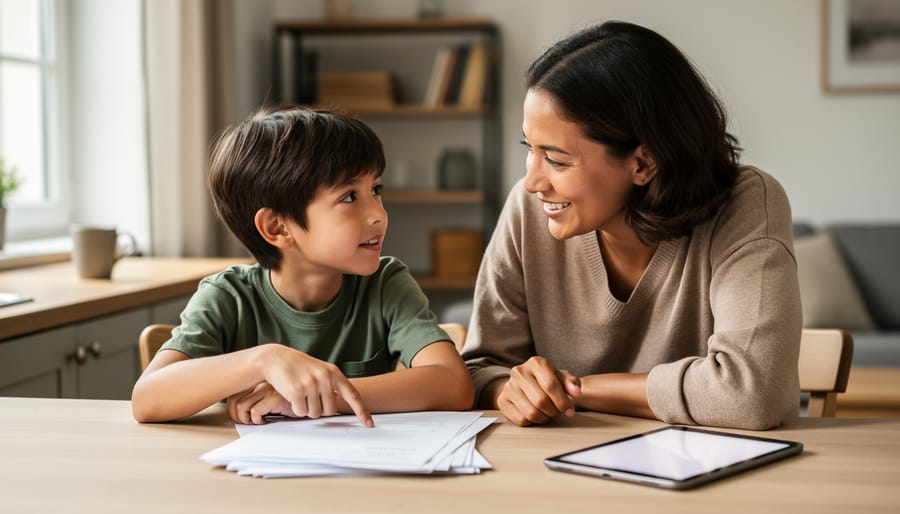
Remember that moment when you realized your kitchen table had become a full-time classroom, tech support center, and emotional safe haven all at once? You’re not alone. Parental insights from the virtual schooling era go far beyond “how to set up Zoom” or “create a study space.” They’re about discovering hidden strengths in ourselves and our kids, learning to trust our instincts when the rules kept changing, and finding out what really matters when everything familiar gets stripped away.
The lessons we learned during that season aren’t just pandemic memories gathering dust. They’re tools we’re still using today as we help our kids through homework struggles, navigate new technology, and balance screen time with real connection. Those late-night conversations with other parents, the trial-and-error moments that became breakthroughs, and the grace we learned to give ourselves when things fell apart have shaped how we parent right now.
What surprised most of us wasn’t just how hard it was. It was how capable we turned out to be, how resilient our kids were when we stopped expecting perfection, and how much we could simplify when we had no other choice. The families who came through that experience with the most clarity weren’t the ones who had it all figured out. They were the ones willing to let go of what wasn’t working, ask for help, and celebrate small wins along the way.
This collection of insights brings together what really worked, what we wish we’d known sooner, and what we’re carrying forward as parents in 2026.
The Unexpected Gifts: What Virtual Schooling Revealed About Our Kids
Learning How Our Children Actually Learn
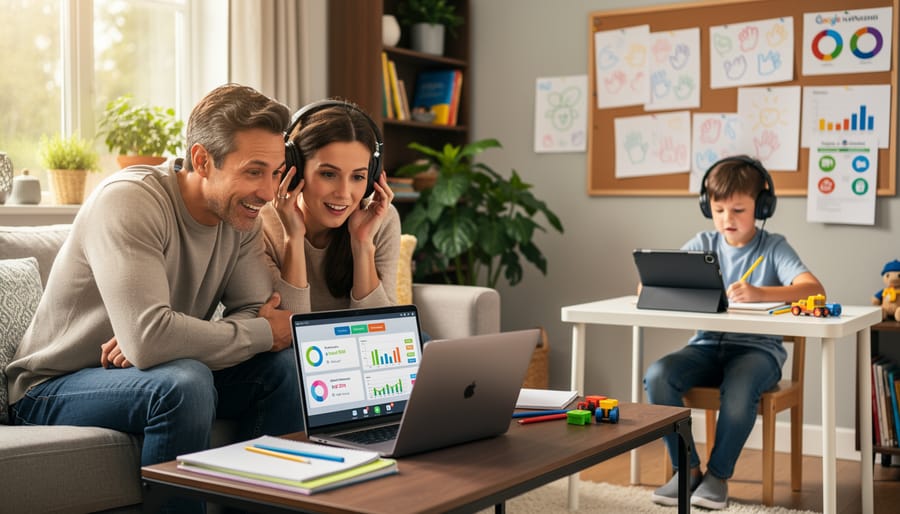
Sitting three feet away while your child navigated Zoom classes revealed something many of us had never considered: our kids don’t all learn the same way. Some children perked up during video presentations but glazed over during lecture-style teaching. Others fidgeted constantly but absorbed everything, while some needed to write, draw, or physically manipulate objects to grasp concepts.
Virtual schooling became an unintentional crash course in learning styles. Parents noticed patterns, the child who finally understood math when they could use blocks or beans, the reader who retained stories better when listening to audiobooks, the writer who needed colorful diagrams before concepts clicked. These weren’t just preferences. They were clues to how our children’s brains actually process information.
The real gift? This knowledge didn’t become obsolete when kids returned to traditional classrooms. Parents now advocate for their children more effectively, requesting visual aids for abstract concepts or suggesting hands-on projects. We create homework environments that match their learning styles, quiet spaces for some, background music for others, standing desks for the movers. What felt like survival mode teaching actually gave us a roadmap for supporting our children’s education long-term.
Understanding Their Social and Emotional Needs
When our kids’ entire social world suddenly fit into a computer screen, we saw things we’d never noticed before. The child who seemed fine at school turned out to crave constant connection, texting friends between classes, needing virtual hangouts after the school day ended. Meanwhile, the one we thought was extroverted often seemed relieved to skip the cafeteria chaos, thriving with just one or two close friendships maintained through gaming sessions.
We watched meltdowns happen in real time instead of hearing about them secondhand from teachers. That showed us which transitions were hardest, which social situations drained their batteries, and when they genuinely needed downtime versus when they were avoiding something difficult.
Many parents discovered their children were masking exhaustion or anxiety at school, holding it together all day and falling apart at home. Seeing them navigate (or struggle with) peer conflicts through messages and video calls gave us insight into their communication styles and where they needed coaching.
These observations didn’t vanish when schools reopened. We still recognize the signs of social overwhelm, know which friendships fuel them versus drain them, and can better support their emotional needs throughout the school year.
Hard Truths About Our Parenting and Family Dynamics
The Patience We Didn’t Know We Had (or Needed)
Remember the first time you tried explaining long division to a seven-year-old who just wanted to watch TV? Or the moment your teenager’s camera stayed stubbornly off during class for the third day in a row? Virtual schooling showed us exactly where our patience ended, and it wasn’t pretty.
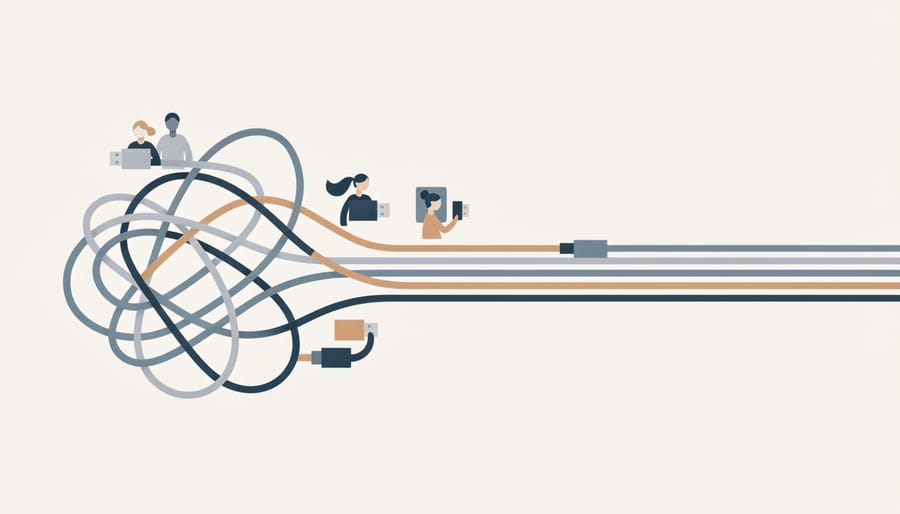
Most of us hit breaking points we never knew existed. The snapping over unmuted microphones. The tears over technology glitches. The deep breaths that didn’t quite work anymore. What we discovered about our limits wasn’t comfortable, but it was real.
Here’s what happened, though: we couldn’t quit. So we got creative. Some parents instituted “patience breaks” between subjects. Others learned to walk away mid-math-meltdown instead of escalating. Many of us discovered that preventing parent burnout meant accepting that not every assignment would be perfect.
The strategies stuck. We still take those deep breaths before homework battles. We still recognize when frustration builds and call for breaks. Virtual schooling didn’t magically increase our patience, but it taught us to manage what we have more wisely, and that matters just as much.
Work-Life Balance Was Already Broken
Virtual schooling didn’t create our work-life balance problems. It just made them impossible to ignore.
When the dining table became both office and classroom, when lunch breaks turned into learning support sessions, and when video calls overlapped with math meltdowns, parents suddenly saw how blurred the boundaries had already become. Many of us had been answering emails during dinner, working weekends, and feeling perpetually “on” long before our kids logged into their first Zoom class. Virtual schooling just cranked up the volume on a system that was already straining.
The wake-up call hit different families in different ways. Some parents realized they’d been prioritizing work availability over family presence for years. Others discovered their partners had completely different assumptions about who would handle school support versus work emergencies. The virtual stress forced conversations many couples had been avoiding about division of labor, career priorities, and what “flexible” work actually meant.
Here’s what’s stayed with us: many families created clearer boundaries that outlasted remote learning. Defined work hours with visual signals for kids. Actual lunch breaks. Saying no to after-hours requests without guilt. Some parents negotiated permanent flexibility with employers, armed with proof that they could manage both responsibilities when systems were in place. Others made tough career shifts, realizing the old setup wasn’t sustainable regardless of where school happened.
The hard truth is that virtual schooling didn’t break work-life balance. It revealed what was already broken and gave some families the push to finally fix it.
Technology Lessons That Outlasted the Pandemic
The Screen Time Conversation Got Real
Virtual schooling demolished the old “limit screen time to one hour” rule overnight. When your child needs six hours online for school, plus another hour for homework, suddenly the American Academy of Pediatrics guidelines feel quaint. Parents had to get specific fast: educational screen time became different from entertainment screen time, and Zoom fatigue became a real consideration even for eight-year-olds.
Most families developed what one mom calls “the new math”, counting recreational screens separately from learning screens, building in mandatory breaks between online classes, and recognizing that a nature walk after school mattered more than the total daily minutes logged. The virtual strategies that worked best acknowledged screens as tools rather than blanket threats, and many parents now apply that nuance to homework apps and educational YouTube channels.
The biggest shift? Conversations about why we’re on screens, not just how long. That distinction stuck with families and changed how they approach technology today.
Digital Tools We’re Still Using
Virtual schooling forced us into a crash course on educational technology, and while we gladly handed classroom management back to teachers, some digital tools proved genuinely useful for ongoing homework and learning support.
Khan Academy remains a go-to for many families when kids hit a math wall or need concept review. The step-by-step explanations help without parents needing to become algebra experts again. Similarly, apps like Quizlet transformed study sessions, kids create their own flashcards, and the gamified review actually keeps them engaged longer than paper flashcards ever did.
For organization, Google Classroom or similar platforms that schools already use mean parents can finally see what’s actually due without the dreaded “I forgot my homework at school” excuse. Many families now check these Sunday evenings to plan the week ahead.
Duolingo stuck around in households wanting to maintain language learning momentum, while apps like Epic or Libby kept reluctant readers engaged with audiobooks and digital libraries. The key insight? We’re more selective now, keeping only tools that genuinely help rather than downloading everything that promises educational value.
Structure, Routine, and Flexibility: Finding the Balance
Morning Routines That Actually Work
One revelation that emerged during virtual schooling: the morning rush wasn’t actually inevitable. When families stripped away the frantic “get out the door” energy, many discovered what their kids really needed to start the day well.
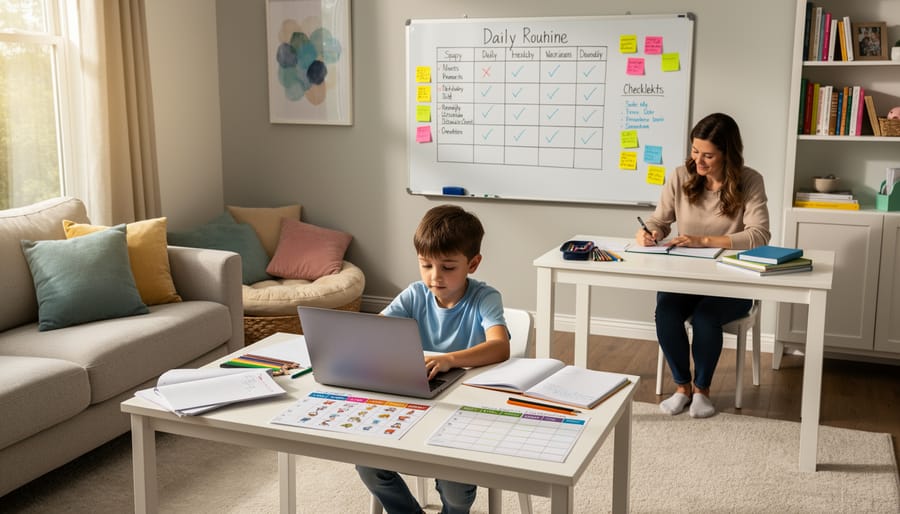
Some families realized their children needed a slow, quiet wake-up, thirty minutes of gentle transition before any demands. Others found their kids thrived with immediate structure: breakfast, get dressed, straight to the desk. There wasn’t a one-size-fits-all answer, and that was the insight.
The routines that stuck tend to share common elements. They start the night before, with backpacks organized and outfits chosen. They build in buffer time rather than cutting things close. Most importantly, they match the family’s actual energy and schedule instead of following some parenting magazine ideal.
Parents with early work schedules learned to prep breakfast items kids could grab independently. Night-owl families stopped forcing 6 AM wake-ups and designed their mornings around realistic timing. The lesson? A routine that works for your actual family beats a perfect routine that creates daily stress.
When to Hold the Line and When to Let Go
Virtual schooling taught us that not every rule deserves equal weight. Many parents discovered that bedtimes could slide a little when learning from home, no morning commute meant flexibility, but skipping breakfast or screen breaks proved non-negotiable for focus and mood.
The real breakthrough came when families identified their core values. One mom realized math had to happen at the scheduled time because her daughter’s attention tanked by afternoon, but she stopped battling over where her daughter sat while doing it, the floor, the couch, even lying down, as long as the work got done. Another family held firm on completing assignments but relaxed about perfection when stress ran high.
These real learning systems helped parents distinguish between rules that protected their children’s wellbeing and those that just reflected “how things should look.” The lesson stuck: pick your battles based on impact, not image. When behavior affected health, safety, or respect, parents held the line. When it was about form over function, they learned to let go.
The Teacher Appreciation Insight
Virtual schooling gave parents an unfiltered view into a teacher’s daily reality, and for most of us, it was humbling. Those months of attempting to keep our children engaged, managing meltdowns over math problems, and repeating instructions for the fifth time while maintaining patience? That was one child. Maybe two or three. Teachers do this with twenty-five kids, different learning needs, and a curriculum to cover.
We watched our frustration levels spike after explaining the same concept three times in a row. We felt the exhaustion of being “on” for hours while managing attention spans that wandered during screen time. We realized that classroom management isn’t just about keeping kids quiet, it’s about reading the room, knowing when to push and when to pause, and somehow meeting each child where they are while moving everyone forward together.
The planning alone was eye-opening. Finding age-appropriate activities, preparing materials, creating engaging lessons that don’t feel like pulling teeth? Teachers don’t just show up and wing it. The behind-the-scenes work we glimpsed during virtual school made many parents rethink their entire view of the profession.
Now, families show appreciation differently. More parents volunteer for classroom needs without waiting to be asked. We respond to teacher emails promptly and assume good intentions. We pack extra supplies knowing they’ll be shared. We advocate for teachers in school board meetings and community conversations, having walked a mile in shoes that never quite fit us.
Virtual schooling didn’t just teach us about our kids. It taught us that teachers deserve far more recognition, support, and resources than they receive. That insight stuck.
What We’re Keeping: Lasting Changes to Family Life
Virtual schooling forced us to slow down and rethink how our households operated. Many of those changes stuck around because they genuinely improved our family life.
The biggest keeper for countless families? Eating lunch together. When kids were home all day, midday meals became a natural gathering point. Parents discovered that those 20 minutes of conversation, laughter, and connection were too valuable to give up. Many families now prioritize at least one shared weekday meal, even if it means adjusting work schedules or meeting kids right after school.
Our involvement in education looks different now. We’re not hovering over every assignment, but we have a better grasp of what our children are actually learning. Many parents continue the practice of checking in about schoolwork earlier in the week rather than Sunday night scrambles. We ask more specific questions because we understand the curriculum better. We know when to step in and when to step back.
Family meetings became essential during virtual school chaos, and plenty of households kept them going. A quick Sunday afternoon check-in about the week ahead helps everyone feel prepared and heard. These don’t need to be formal, just a chance for everyone to know what’s coming and voice concerns.
We also kept certain tech boundaries that emerged from necessity. Designated device-free times, charging stations outside bedrooms, and clearer expectations about when screens are for learning versus entertainment all survived the transition back to regular school.
The structures that reduced our stress during an impossibly stressful time proved they had lasting value. We’re not keeping everything from that year, but the changes that made us more connected and intentional? Those are staying.
Common Questions from Parents Reflecting on Virtual Schooling
Parents often wonder how to bridge what they learned during virtual schooling with today’s reality. These questions come up frequently in parent groups and school communities.
How can I use what I learned about my child’s learning style now that they’re back in traditional school?
Share your observations with teachers during conferences and create homework environments at home that match your child’s learning preferences. If you discovered they’re a visual learner, for example, encourage them to make diagrams or use color-coding for studying.
My younger child never experienced virtual schooling. Should I recreate any of those experiences?
You don’t need to recreate virtual school, but you can apply the kid-friendly routines and involvement practices you developed. Being present for learning moments and understanding how your child processes information matters regardless of how you gained that awareness.
How do I maintain the positive habits we formed during virtual schooling?
Start small and choose what truly serves your family now. If family lunch was meaningful, protect it on weekends or certain weekdays. If morning check-ins helped, keep those even if mornings are rushed.
I’m worried about learning gaps from that year. What should I focus on?
Talk with your child’s current teachers about specific concerns rather than assuming there are gaps. Many children caught up faster than expected, and schools have been addressing this for years now. Focus on fostering curiosity and supporting homework rather than trying to reteach entire subjects at home.
The virtual schooling experience gave many parents a crash course in education, but that doesn’t mean you need to become a teacher at home now. What matters most is staying engaged with your child’s learning journey and communicating openly with their school. The awareness you developed about how your child learns, what motivates them, and when they need extra support remains valuable information.
Some parents feel pressure to maintain every positive change from that period, but that’s unrealistic. Pick the practices that genuinely improve your family life and let go of the rest without guilt. Your family’s needs have evolved since then, and your routines should evolve too.
Looking back on our year of virtual schooling, it’s clear that every family wrote their own story. Some of us discovered hidden reserves of patience. Others learned we needed more help than we thought. Many of us realized our kids were more capable than we gave them credit for, while also understanding just how much they need their teachers and friends.
There’s no single takeaway that fits every household. Your biggest insight might have been about technology boundaries, while another parent’s revelation centered on morning routines or learning styles. Both matter. All of it counts.
The lessons that stuck with your family are the right ones to keep. Maybe you’re still doing family lunches together, or you’ve held onto that homework system that actually works, or you’ve maintained the open communication lines you built during those challenging months. These aren’t just pandemic survival tactics. They’re the genuine improvements we forged under pressure.
We proved something important during that time: parents adapt, kids are resilient, and families figure it out. That strength didn’t disappear when the laptops closed. It’s still here, ready for whatever comes next.
What insight from virtual schooling still shapes your family today? Your story matters too.